 Welcome to ANCI Website!
 Certificate query
 Follow WeChat
 Anci Weibo
 Sitemap
 中文
中文
anciContact Us
Service Hotline
net01@gtggroup.com
Mobile: 18826804895
FAX: 0769-85075898
E-mail: net01@gtggroup.com
Address: No. 11, headquarters 2 Road, Songshanhu high tech Industrial Development Zone, Dongguan City, Guangdong Province
IP rating waterproof test of power supply products
Edit: ANCI 2026-05-11 324
IP waterproof rating testing for power supply units is primarily a verification of enclosure protection levels in accordance with IEC 60529 (and harmonized standards such as EN 60529). Whether you're dealing with an outdoor LED driver, an industrial power module, or an EV charger component, understanding how the test is conducted, what the pass/fail criteria are, and where designs commonly fall short can save significant engineering rework. The following provides a structured overview of the testing methodology, critical failure points, and practical preparation steps — all grounded in the latest edition of the standard.
Breaking Down the IP Code for Power Supplies
The IP code (Ingress Protection) consists of two digits: the first defines protection against solid foreign objects (0–6), while the second defines protection against water (0–9K). For power supply enclosures, the second digit is almost always the critical parameter. Typical ratings encountered in consumer, commercial, and industrial power electronics include IPX4 (splashing water), IPX5 (water jets), IPX6 (powerful water jets), IPX7 (temporary immersion), and IPX8 (continuous immersion).
Selecting the appropriate rating is not about "higher is better". It must match the installation environment. An indoor power supply exposed to condensation may only need IPX4, while a wall-mounted outdoor unit exposed to driving rain typically requires IPX5 or IPX6. Units that may become submerged, even briefly, must meet IPX7. In our lab observations over the past year, many manufacturers initially request IP68 testing, but a careful review of their design often reveals that the enclosure fails to even maintain IPX5 consistently — chasing a higher rating without fixing basic sealing issues only elongates the development cycle.
Key Test Methods According to IEC 60529
The definitive standard for ingress protection is IEC 60529 (currently edition 2.2, with amendments up to 2013). For power supplies, testing is conducted on the complete enclosure in its intended mounting orientation. It is critical to define before testing whether the unit will be energized, loaded, or in a passive state, as any heat generation can affect internal pressure and sealing performance.
Water test procedures at a glance
- IPX4 – Splashing water: Oscillating tube or spray nozzle, flow rate approx. 10 L/min, duration at least 5 min. Water is directed from all practicable directions; no harmful ingress allowed.
- IPX5 – Water jets: Nozzle diameter 6.3 mm, flow rate 12.5 ±0.625 L/min, water pressure approx. 30 kPa at 2.5 m distance. Test duration at least 3 min from a distance of 2.5–3 m.
- IPX6 – Powerful water jets: Nozzle diameter 12.5 mm, flow rate 100 ±5 L/min, water pressure approx. 100 kPa at 2.5 m. Duration at least 3 min.
- IPX7 – Temporary immersion: Immerse the lowest point of the enclosure at 1 m below water surface for 30 min. If water enters, it shall not cause any detrimental effect or reach live parts.
- IPX8 – Continuous immersion: Conditions are agreed between manufacturer and lab, typically depth >1 m and duration of several hours, depending on the relevant product standard.
When a product is marked with multiple water ratings, such as IP65/IP67, both IPX5 and IPX7 tests must be passed independently. A common pitfall is assuming that an enclosure that seals well against jets will automatically pass immersion — it often does not, especially when dynamic seals and cable glands are involved.
Typical Failure Modes and Pre-Test Validation
Based on teardown analyses of power supplies that encountered issues during IP testing, we consistently see a handful of recurrent weaknesses. Addressing these before formal testing can markedly reduce turnaround time.
Enclosure seams and gasket consistency
Uneven compression of gaskets, insufficient gasket material (often too low durometer for the required compression set), and inconsistent screw torque all create micro-channels for water ingress. In one IPX6 pre-scan of an outdoor LED driver, two out of three samples showed internal moisture intrusion caused by a slight variation in the ultrasonic welding parameters — a stark reminder that process repeatability is just as important as the design itself.
Cable entries and breather vents
Cable glands must match the actual cable outer diameter within the manufacturer’s specified clamping range. Mismatched combinations are a frequent root cause of water wicking along the cable. For enclosures fitted with breather vents (pressure-equalization elements), ensure the membrane is rated for the intended IP level — standard hydrophobic membranes may not withstand the hydrostatic pressure of an IPX7 immersion.
Post-test dielectric verification
IEC 60529 requires that after water exposure, the unit must still pass the relevant electric strength and insulation resistance tests. An enclosure may appear internally dry, but if moisture has compromised insulation barriers or reduced creepage distances, a later high-potential test will reveal the latent defect. Including a damp-heat insulation check in the pre-compliance phase is strongly recommended.
Practical note: Many teams rush samples to the lab before the sealing compounds are fully cured. Allow the full recommended curing time under production-representative conditions; otherwise the test results will not reflect the final product's capability.
Estimated Timeline and Preparation Workflow
Test duration is influenced by product complexity, the number of IP levels being evaluated simultaneously, and whether the samples perform without incident. When samples are complete and no redesign is needed, a single IPX4, IPX5, or IPX6 test cycle typically requires 2 to 5 working days for the measurement phase and report drafting. Including IPX7 or IPX8 immersion extends the timeline accordingly. For a multi-rating test package, a representative timeframe is around 5 to 12 working days, subject to current lab loading and sample behavior.
A standardized preparation checklist helps streamline the process: ① Confirm the target IP rating and applicable standard clauses. ② Supply mechanical drawings and bill of materials for the enclosure. ③ Provide a minimum of three production-representative samples. ④ Include all auxiliary sealing components (gaskets, plugs, cable glands). ⑤ Declare whether the power supply will operate under load during the test. ⑥ Align with the lab on the worst-case mounting orientation. Completing these steps in advance significantly reduces documentation delays.
Choosing a Competent IP Testing Partner
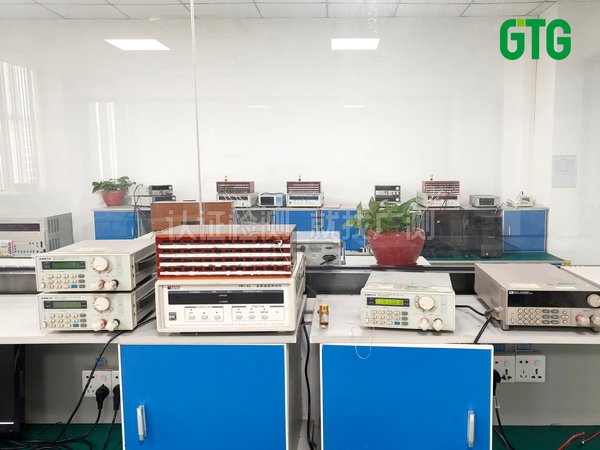
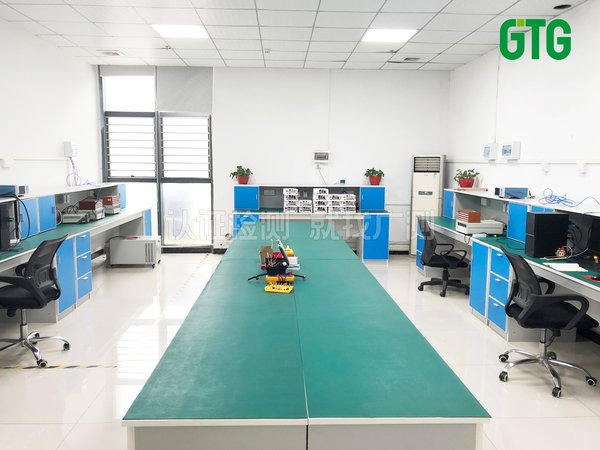
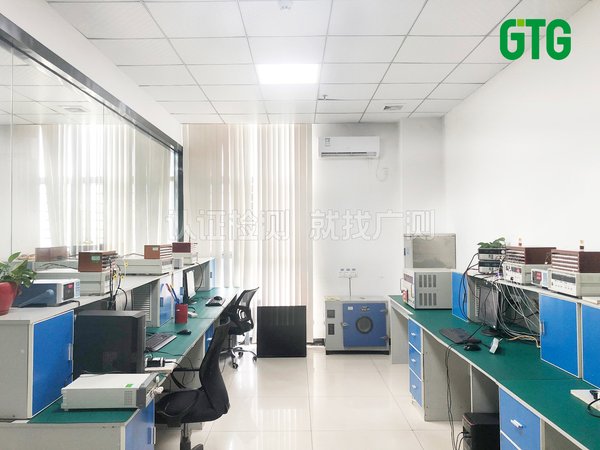
To generate internationally recognized test data, the laboratory should be accredited to ISO/IEC 17025 and be equipped with the specified nozzle dimensions, calibrated flow meters, and pressure transducers mandated by IEC 60529. Anci testing services routinely handle power supply enclosures across multiple form factors — from enclosed PCB-mount modules to large-scale industrial converters — and can assist with pre-scan evaluations, root cause analysis of sealing failures, and comparative testing against different IP categories. For a detailed discussion of power supply ingress protection solutions, early technical alignment is the most efficient path to certification-ready results.
It is worth reiterating that no reputable lab can guarantee a particular outcome. What an experienced partner can do is provide objective pre-compliance feedback, identify borderline design margins, and document the evidence that ultimately supports a robust compliance declaration. That's the core value behind Anci IP rating consultation — replacing assumptions with measurement data and iterative guesswork with structured preparation.
Frequently Asked Questions
Q1 Does potting eliminate the need for IP testing?
Potting significantly improves water resistance, but it does not replace formal IP verification. Bonding defects at the compound-to-housing interface and stress cracking at wire terminations can still occur and must be validated under real test conditions.
Q2 Is a certified component list required for IP testing?
No. The testing focuses on the physical enclosure performance. However, basic material information for seals and housing is needed to confirm compatibility with the test method.
Q3 Can IPX5 testing substitute for IPX7?
No. The two tests evaluate entirely different exposure conditions — jets versus submersion. A product claiming dual ratings must pass both independently.
Q4 What is the recommended IP rating for outdoor power supplies?
IPX5 is suitable for rain-exposed locations. IPX6 is preferred where high-pressure cleaning or severe storm conditions are expected. For areas prone to temporary flooding, IPX7 is the baseline. The final choice should always be driven by the site-specific risk assessment.
This article is AI-assisted and for informational purposes only. It does not constitute certification advice or a legal opinion. Please refer to the latest official regulations and standards.
Contact: net01@gtggroup.com
Online Application
Global certification testing, please look for ANCI
Leave a message, certified engineers 1 to 1 technical guidance!
