 Welcome to ANCI Website!
 Certificate query
 Follow WeChat
 Anci Weibo
 Sitemap
 中文
中文
anciContact Us
Service Hotline
net01@gtggroup.com
Mobile: 18826804895
FAX: 0769-85075898
E-mail: net01@gtggroup.com
Address: No. 11, headquarters 2 Road, Songshanhu high tech Industrial Development Zone, Dongguan City, Guangdong Province
Battery-CB-Certification-Common-Issues-and-Solutions
Edit: ANCI 2026-05-28 268
CB certification under the IECEE CB Scheme provides an internationally recognized pathway for battery product safety testing. This article addresses the common issues manufacturers encounter during CB certification, provides practical solutions, and explains how to leverage the CB report for multiple national certifications.
CB Scheme Overview for Battery Products
The IECEE CB Scheme is a multilateral agreement among participating countries that allows manufacturers to obtain a CB test report and certificate from one National Certification Body (NCB), which can then be used to obtain national certifications in other member countries without redundant testing.
For battery products, the primary CB standard is:
IEC 62133-1:2017+A1:2021 — Safety requirements for portable sealed secondary lithium cells/batteries (for applications other than button cells)
IEC 62133-2:2017+A1:2021 — Safety requirements for portable sealed secondary lithium cells/batteries (for button cell applications)
CB certification is particularly valuable for battery manufacturers targeting multiple markets simultaneously, as the CB test report can be converted into national certifications such as KC (Korea), PSE (Japan), BIS (India), and others.
Common Issue 1 — Test Sample Preparation Failures
One of the most frequently encountered problems in battery CB certification is improper sample preparation:
- Insufficient cycle count:IEC 62133 requires cells to be cycled to 50 cycles before certain tests (T.7 overcharge, T.8 forced discharge). Many manufacturers send samples at 0 cycles, requiring additional time for cycling at the laboratory
- Sample quantity errors:IEC 62133-1 requires different sample quantities for cell tests vs. battery tests. Cells need 21-25 samples; battery packs need 8-10 samples depending on test items
- Inconsistent sample quality:Samples from different production batches may exhibit different performance characteristics, leading to inconsistent test results
Pro Tip:Always prepare 20% more samples than the minimum requirement. This provides backup samples in case of test anomalies or additional verification needs. Coordinate with your testing laboratory in advance to confirm exact sample quantities and pre-cycling requirements.
Common Issue 2 — Thermal Abuse Test Failures
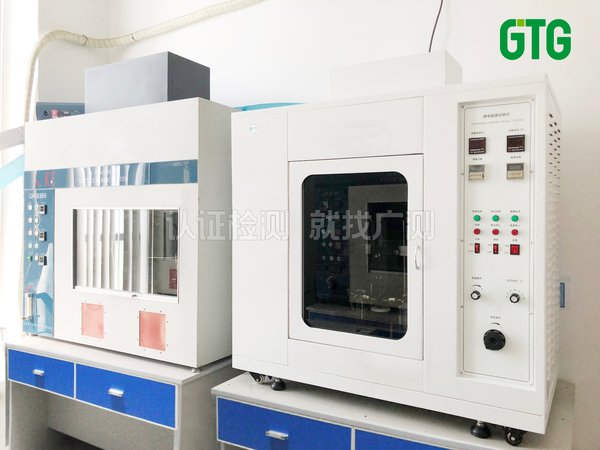
The thermal abuse test (IEC 62133-1, Section 7.3.4) is one of the most critical and frequently failed test items in battery CB certification. The test requires cells to be heated at a rate of 5°C/min to 130°C±2K and held for 30 minutes.
Common failure modes include:
- Fire or explosion during heating
- Excessive leakage exceeding allowable limits
- Rupture of cell casing
Design improvements to address thermal abuse failures:
- Use ceramic-coated separators with higher thermal shutdown temperature
- Optimize electrolyte formulation with flame-retardant additives
- Incorporate CID (Current Interrupt Device) for over-temperature protection
Common Issue 3 — National Deviations and Conversion Challenges
While the CB Scheme facilitates international certification, national deviations remain a significant challenge:
- Korea (KC):Requires additional tests not covered by IEC 62133, including overcharge protection verification at the battery pack level
- Japan (PSE):Requires compliance with JIS C 8712/J62133 with specific Japanese national deviations; potential additional test items for lithium-ion batteries
- India (BIS):IS 16046 has specific national deviations from IEC 62133, and requires local factory inspection for some categories
Strategy: When applying for CB certification, explicitly include the national deviations of your target markets in the CB application. This ensures that deviation tests are performed during the initial CB testing phase, avoiding the need for supplementary testing when converting the CB report later. Experienced certification bodies like ANCI can help identify all applicable national deviations upfront.
Common Issue 4 — Documentation Gaps
Incomplete or inconsistent documentation is another frequent cause of CB certification delays:
- Specification inconsistencies:Cell specification sheets that do not match actual test sample parameters (capacity, voltage, dimensions)
- Missing BMS documentation:Incomplete protection circuit descriptions, missing overcharge/overdischarge threshold values
- Inadequate labeling information:Missing warning labels, incomplete markings required by IEC 62133
Practical Insight:In a lithium polymer battery CB certification project, the cell specification listed 3.7V nominal voltage but actual samples measured 3.85V. The CB testing laboratory flagged this discrepancy and required the manufacturer to revise the specification sheet. This added one week to the project timeline. Always verify that sample parameters match documentation before submission.
Maximizing CB Report Value for Multi-Market Access
To maximize the value of your CB certification investment:
- Include all target market national deviations in the initial CB application
- Choose an NCB with broad multilateral recognition (memberships across multiple NCBS)
- Ensure test reports reference the latest version of IEC 62133 (including amendments)
- Maintain consistency between CB test report product descriptions and target market application documents
This article is AI-assisted and for reference only. It does not constitute any certification commitment or legal advice. Please refer to the latest official regulations.
Contact: 18826804895 | net01@gtggroup.com
Online Application
Global certification testing, please look for ANCI
Leave a message, certified engineers 1 to 1 technical guidance!
