 Welcome to ANCI Website!
 Certificate query
 Follow WeChat
 Anci Weibo
 Sitemap
 中文
中文
anciContact Us
Service Hotline
net01@gtggroup.com
Mobile: 18826804895
FAX: 0769-85075898
E-mail: net01@gtggroup.com
Address: No. 11, headquarters 2 Road, Songshanhu high tech Industrial Development Zone, Dongguan City, Guangdong Province
Power-Bank-CE-Certification-Compliance-Guide
Edit: ANCI 2026-06-01 196
Power banks entering the European market must comply with CE marking requirements covering safety, electromagnetic compatibility, and radio equipment regulations. This guide outlines the complete CE certification pathway for power banks, helping manufacturers navigate the multi-directive compliance landscape.
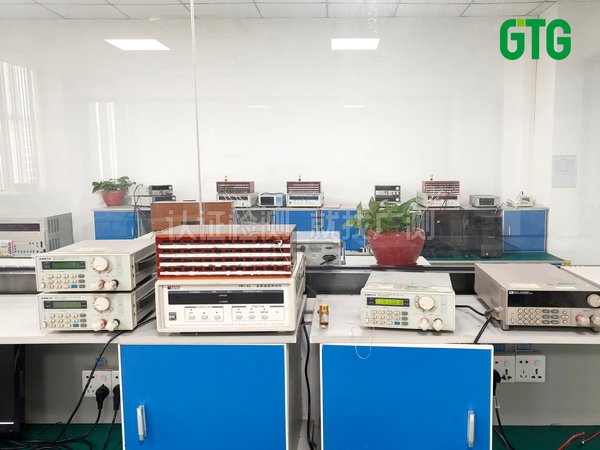
CE Directives Applicable to Power Banks
Power banks are subject to multiple EU directives, and CE marking requires compliance with all applicable directives simultaneously:
- Low Voltage Directive (LVD) 2014/35/EU:Safety requirements for electrical equipment. Applicable to power banks with output voltage above 5V or devices with AC charging input
- EMC Directive 2014/30/EU:Electromagnetic compatibility — emissions and immunity requirements
- Radio Equipment Directive (RED) 2014/53/EU:Applicable to power banks with wireless charging capability (Qi) or Bluetooth connectivity
- Battery Regulation (EU) 2023/1542:New EU battery regulation with enhanced requirements for safety, sustainability, and labeling — effective February 2027 for portable batteries
For standard USB power banks (5V/2A or 5V/3A output, no wireless features), LVD and EMC directives are the primary requirements. Wireless charging power banks add RED compliance obligations.
Safety Testing Under EN 62368-1 and EN IEC 62133-2
Power bank CE safety certification involves two complementary standard sets:
EN 62368-1 — Equipment Safety
- Energy source classification of battery output and charging input circuits
- Insulation requirements between charging circuit and battery pack
- Temperature testing under normal and fault conditions
- Fire enclosure requirements for plastic housings
EN IEC 62133-2 — Battery Safety
- Cell-level tests: overcharge, external short circuit, thermal abuse, crush, impact, nail penetration
- Battery pack tests: overcharge protection, external short circuit, overcurrent protection, transport tests
Practical Insight:A 20000mAh power bank with 65W PD output failed the EN 62368-1 abnormal operation test. When the BMS over-discharge protection was bypassed (single fault condition), the boost converter output stage continued to deliver power, causing the lithium polymer cells to be discharged below 2.5V — a hazardous condition. Adding a secondary hardware voltage monitoring IC independent of the primary BMS resolved the issue, providing redundant under-voltage protection.
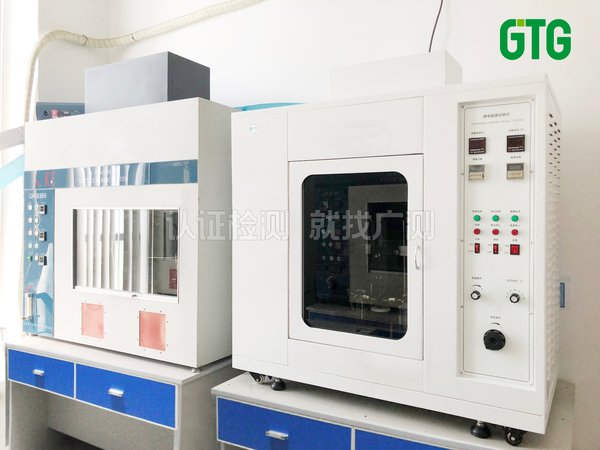
EMC and RED Testing for Power Banks
EMC testing under the EMC Directive covers:
- Emissions: EN 55032 (conducted and radiated) — Class B for residential environments
- Immunity: EN 55035 (ESD, EFT, surge, conducted and radiated immunity)
For power banks with wireless charging (Qi), RED testing adds:
- EN 303 417 — Wireless power transfer EMC standard
- RF exposure evaluation (magnetic field exposure from Qi coil)
High-power PD power banks (45W-100W) generate more EMI due to the switching converter, requiring careful EMC design. GTG Group provides comprehensive CE testing services covering LVD, EMC, and RED requirements for power banks.
New EU Battery Regulation — What to Prepare
The EU Battery Regulation (2023/1542) introduces significant new requirements that power bank manufacturers must prepare for:
- Carbon footprint declaration:Required for portable batteries from February 2027
- Recycled content requirements:Minimum percentages of recycled cobalt, lead, lithium, and nickel from 2028
- Digital battery passport:QR code linking to battery information — required from February 2027
- Removability and replaceability:Batteries must be designed for user replacement without special tools
Manufacturers should begin preparing supply chain documentation and design changes now to meet these upcoming requirements. CE certification timeline for standard power banks is approximately 6-8 weeks.
This article is AI-assisted and for reference only. It does not constitute any certification commitment or legal advice. Please refer to the latest official regulations.
Contact: 18826804895 | net01@gtggroup.com
Online Application
Global certification testing, please look for ANCI
Leave a message, certified engineers 1 to 1 technical guidance!
