 Welcome to ANCI Website!
 Certificate query
 Follow WeChat
 Anci Weibo
 Sitemap
 中文
中文
anciContact Us
Service Hotline
net01@gtggroup.com
Mobile: 18826804895
FAX: 0769-85075898
E-mail: net01@gtggroup.com
Address: No. 11, headquarters 2 Road, Songshanhu high tech Industrial Development Zone, Dongguan City, Guangdong Province
Power-Tool-CB-Certification-Testing-Standards-and-Application-Guide
Edit: ANCI 2026-06-04 201
Power tools require CB certification under the IECEE CB Scheme for international market access. This guide covers the CB certification testing standards for power tools and the application process for obtaining CB test certificates.
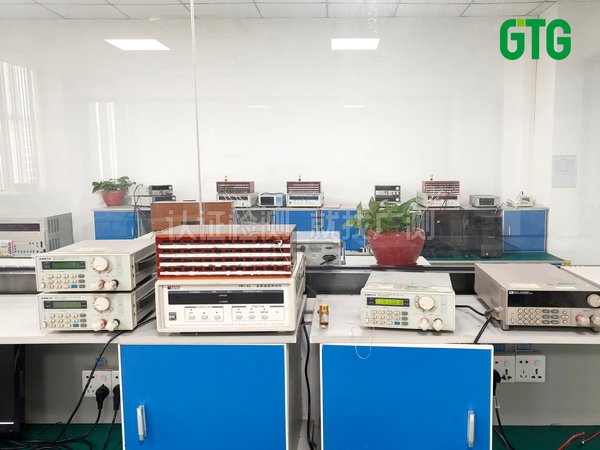
CB Standards for Power Tools
Power tools fall under the following IEC standards for CB certification:
IEC 60745-1 Hand-held motor-operated electric tools — Safety — General requirements
IEC 60745-2-X Particular requirements for specific types (drills, grinders, saws, etc.)
IEC 61029-1 Transportable motor-operated electric tools — Safety — General requirements
IEC 62841-1 Electric motor-operated tools — Safety (replaces both IEC 60745 and IEC 61029 series progressively)
Note: IEC 62841 is gradually replacing IEC 60745 and IEC 61029. Check the latest CB Bulletin for current standard acceptance status.
Key Safety Testing Items
Power tool CB safety testing includes these critical evaluations:
- Mechanical safety:Guard integrity, tool retention system, blade/brush guard strength. Guards must withstand specified impact forces without permanent deformation
- Temperature testing:Motor windings, switch contacts, handle surfaces, and bearing temperatures under rated load. Handle temperature limits are particularly strict to prevent user burns
- Stalling and overload:Motor must not create a fire hazard under locked-rotor conditions. Protection devices (thermal protectors, current limiters) must operate reliably
- Switch endurance:Power tool switches must withstand 50,000 operating cycles for most tools
- Double insulation verification:Class II tools must maintain reinforced insulation between live parts and accessible surfaces
Practical Insight:A corded angle grinder (100mm, 750W) failed CB stalling test. Under locked-rotor conditions, the motor current surged to 28A (7× rated current), and the thermal protector took 22 seconds to trip — during which the motor windings reached 195°C, exceeding the Class F insulation limit (155°C). The thermal protector was located on the stator surface where it responded slowly to rotor heating. Moving the thermal protector closer to the rotor end-turn area (highest temperature point) and changing to a faster-response type reduced the trip time to 8 seconds, keeping windings below 145°C.
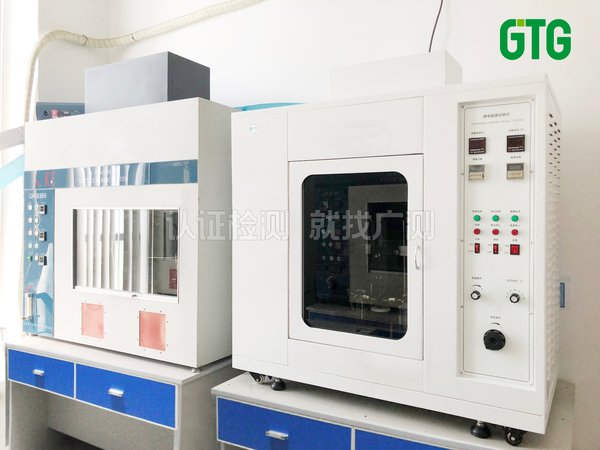
CB Certification Process
- ①Application:Apply to an NCMB (National Certification Body Member of the IECEE)
- ②Testing:Full IEC standard testing at a CBTL (CB Testing Laboratory)
- ③CB test report:CBTL issues CB test report with national difference data
- ④CB certificate:NCMB issues CB test certificate
Timeline: 6-10 weeks. The CB certificate + report can then be used for national certification in 50+ IECEE member countries. GTG provides power tool CB certification pre-testing and consulting services.
National Differences for Key Markets
- Europe:EN 60745/62841 with CE marking, additional EMC testing (EN 55014-1/2)
- US:UL 60745 (requires separate UL listing — CB report cannot directly convert)
- Australia:AS/NZS 60745 with regulatory compliance mark (RCM)
- China:GB 3883 (CCC mandatory certification — CB report can partially support application)
This article is AI-assisted and for reference only. It does not constitute any certification commitment or legal advice. Please refer to the latest official regulations.
Contact: 18826804895 | net01@gtggroup.com
Online Application
Global certification testing, please look for ANCI
Leave a message, certified engineers 1 to 1 technical guidance!
