 Welcome to ANCI Website!
 Certificate query
 Follow WeChat
 Anci Weibo
 Sitemap
 中文
中文
anciContact Us
Service Hotline
net01@gtggroup.com
Mobile: 18826804895
FAX: 0769-85075898
E-mail: net01@gtggroup.com
Address: No. 11, headquarters 2 Road, Songshanhu high tech Industrial Development Zone, Dongguan City, Guangdong Province
Fast Charger CCC Certification Application Guide and Compliance Strategy
Edit: ANCI 2026-07-06 338
China Compulsory Certification for fast chargers — covering USB PD, Qualcomm Quick Charge, and proprietary fast-charging adapters — is a statutory requirement for products sold in the Chinese market. Fast chargers incorporating GaN technology, multi-protocol support, and compact high-power-density designs present a more complex CCC type-testing profile than conventional fixed-voltage chargers. The multi-voltage output capability, PD protocol safety evaluation, and GaN device qualification represent the three key areas where fast charger CCC certification diverges from standard charger testing. This guide provides a strategic overview of the CCC certification pathway for fast chargers, addressing multi-voltage test strategy, GaN device and protocol chip compliance, and practical approaches for managing certification across rapidly evolving fast-charger product lines.
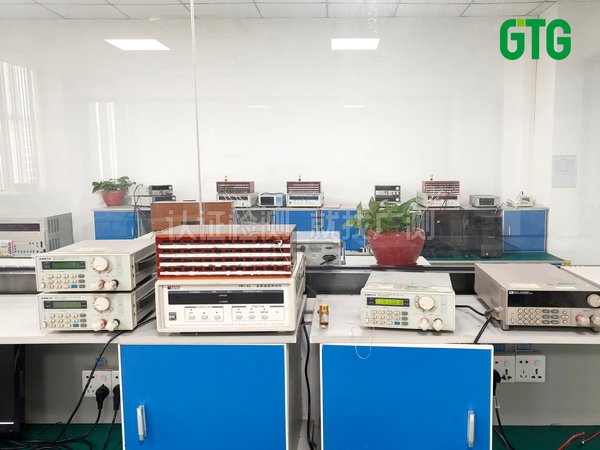
CCC Certification Framework for Fast Chargers
Fast chargers fall under the CCC mandatory certification catalog for IT equipment power supplies. The applicable standards are GB 4943.1-2022 for safety and GB/T 9254.1-2021 for EMC emissions. The CCC type-testing program for fast chargers diverges from fixed-voltage chargers in three critical areas: first, multi-voltage thermal evaluation — temperature rise must be tested at each supported output voltage under full load, with the worst-case voltage subjected to extended thermal mapping; second, fast-charge protocol controller safety — the PD or proprietary protocol chip must demonstrate safe default behavior under communication fault conditions, reverting output to 5V/limited power; and third, GaN device qualification — GaN power switches if used as primary-side switches must provide CCC or international safety certification documentation, and the device's short-circuit withstand characteristics must be evaluated in the fault test plan.
The CCC certification process follows the standard pathway: application submission to a designated certification body, type testing at a designated laboratory, initial factory inspection, and post-certification surveillance. For fast charger manufacturers, the key pre-application step is product unit grouping — determining which power ratings and models can be covered under a single CCC certificate through representative model testing. A 20W PD charger and a 100W multi-port GaN charger are unlikely to share a single certificate due to fundamentally different internal designs. However, a family of PD chargers at 30W, 45W, and 65W sharing the same controller platform and PCB architecture may be covered under one certificate with the 65W model as the fully tested representative.
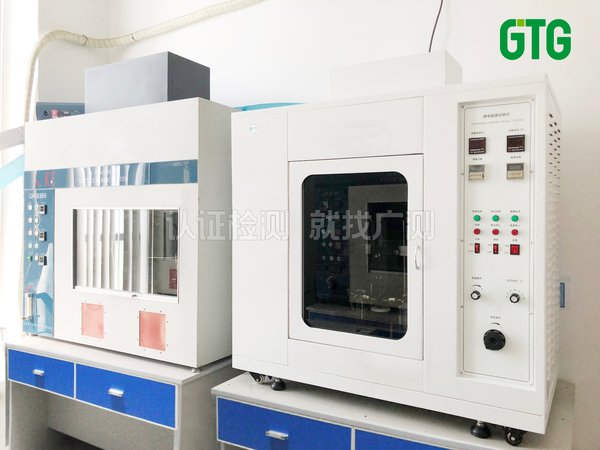
Managing CCC Certification in a Rapid Product Cycle Environment
The fast charger market is characterized by rapid product cycles — new power levels, smaller form factors, and new protocol support arrive on roughly six-month cycles. The CCC certification management challenge is maintaining compliance currency without allowing certification lead time to delay product launches. A platform-based approach is the practical response: design a core platform architecture with standardized safety-critical components (transformer, optocoupler, fuse, PCB material, and enclosure material) that passes CCC certification for the highest-power model, then extend coverage to lower-power variants through engineering assessment and limited verification testing.
Protocol controller firmware updates represent a category of change that requires CCC compliance discipline. Any firmware change affecting output power capability — adding a new PDO voltage level, increasing output current, or modifying over-current protection thresholds — triggers a CCC change assessment. The manufacturer must determine whether the change is administrative (no retesting required), requires limited supplementary testing, or constitutes a new certification application. A documented firmware change impact assessment process linked to the fast charger CCC certification change management system maintains compliance while supporting agile product development. For manufacturers targeting both the Chinese domestic market and international markets, the strategic approach is to coordinate CCC type testing with international certification preparation — generating test data that supports CE, UL, and CB Scheme applications from the same test campaign.
Frequently Asked Questions
Q1 Does a fast charger supporting multiple protocols need separate CCC testing for each?
No. CCC safety testing is based on output voltage and current conditions, not protocol type. A charger advertising support for PD 3.0, QC 4.0, and SCP can be tested at the electrical operating points common across protocols. Only the output voltage/current combinations unique to specific protocols need individual evaluation. The protocol communication capability is assessed for safe default behavior rather than tested per protocol.
Q2 What documentation is required for GaN devices in CCC certification?
The GaN power switch must be listed as a safety-critical component in the CCC application. The following documentation is typically required: manufacturer datasheet with absolute maximum ratings and thermal resistance data; safety certification (CCC voluntary certification, UL Recognition, or IECQ certification); and reliability data demonstrating the device's long-term stability under the charger's operating conditions. GaN devices without any safety certification may trigger a component-level evaluation by the testing laboratory.
Q3 How does CCC type testing handle a fast charger with PPS programmable output?
PPS chargers with continuously adjustable output voltage are tested at selected representative points rather than every possible voltage. The typical approach selects minimum, middle, and maximum PPS voltages for temperature rise testing, with justification in the test plan. The PPS voltage slewing behavior — transitioning between voltage levels in response to device requests — is verified for electrical stability and overshoot control, though this is a functional verification rather than a full thermal test at every intermediate point.
Q4 Can CCC test data for a fast charger support CE and other international certifications?
Yes to a significant degree. GB 4943.1-2022, EN 62368-1, and IEC 62368-1 share the same core standard. Temperature rise data, dielectric strength test results, and fault test outcomes generated during CCC certification can be referenced in CE-LVD and CB Scheme applications. The key operational step is structuring the test report to satisfy multiple certification bodies' documentation requirements from the start. Fast charger CCC and international certification coordination maximizes test data reuse.
Q5 What factors drive CCC certification cost and timeline for fast chargers?
The primary cost drivers are the number of output voltage levels requiring thermal evaluation, whether GaN devices trigger additional component-level assessment, the scope of product family coverage, and the factory inspection logistics. Timeline depends on the readiness of technical documentation, the number of test iterations required, and the certification body's review schedule. Pre-compliance thermal scanning and a well-prepared technical file significantly contribute to a predictable certification timeline.
This content is provided for industry communication and informational reference only and does not constitute any form of certification commitment, testing advice, or legal opinion. The certification requirements, procedures, and standards referenced herein may change as regulations evolve — please refer to the latest official announcements from the relevant authorities. Specific certification requirements, timelines, and costs must be evaluated by professional engineers based on the actual product. For inquiries, please contact us by phone.
Phone: +86 18826804895 | Email: net01@gtggroup.com | www.anci.com
Online Application
Global certification testing, please look for ANCI
Leave a message, certified engineers 1 to 1 technical guidance!
