 Welcome to ANCI Website!
 Certificate query
 Follow WeChat
 Anci Weibo
 Sitemap
 中文
中文
anciContact Us
Service Hotline
net01@gtggroup.com
Mobile: 18826804895
FAX: 0769-85075898
E-mail: net01@gtggroup.com
Address: No. 11, headquarters 2 Road, Songshanhu high tech Industrial Development Zone, Dongguan City, Guangdong Province
Built-in Power Supply FCC Certification EMC Testing and Host Integration
Edit: ANCI 2026-07-10 266
FCC certification for built-in power supplies — embedded power modules, PCB-mount AC-DC converters, and chassis-mount power units — follows the SDOC procedure under FCC Part 15 Subpart B. Unlike enclosed desktop adapters, built-in PSUs rely on the host equipment's enclosure for mechanical protection, EMI shielding, and safety isolation. This integration dependency makes the FCC EMC testing fundamentally a "hosted" evaluation: emissions are measured with the PSU installed in a representative host chassis or test fixture, and the test results are conditioned on the specific installation configuration. This guide provides a technical framework for built-in PSU FCC certification, covering host-dependent test configuration, metal vs. plastic enclosure emission characteristics, product family certification strategy, and coordination with CE-EMC requirements.
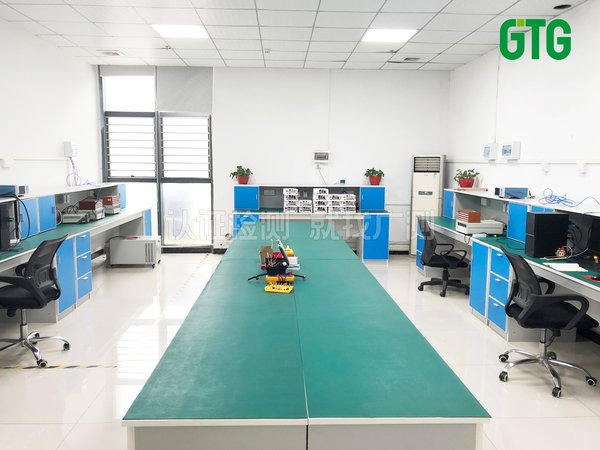
Host-Dependent FCC Testing and Enclosure Effects
Built-in PSUs must be tested in a representative host enclosure because the enclosure material, grounding scheme, internal layout, and ventilation design all influence the measured radiated emissions. Metal enclosures provide electromagnetic shielding that typically reduces radiated emissions by 5-15 dB compared to plastic enclosures — the PSU manufacturer should consider testing in both enclosure types if the product is marketed for integration into diverse equipment. The test report must document the enclosure specifications: material, thickness, internal dimensions, PSU mounting position, input/output cable routing, and grounding connections.
Conducted emission testing for built-in PSUs follows standard LISN methodology on the AC input. Radiated emission testing requires the complete assembly — PSU installed in host chassis — to be positioned on the turntable. Ventilation openings and cable exit points are potential radiation leakage paths that must be within the antenna scan coverage. Built-in PSU host-enclosure FCC testing should evaluate multiple chassis configurations if the PSU is marketed across diverse application segments.
OEM Integration and Multi-Market Certification
OEM equipment manufacturers integrating built-in PSUs into their products reference the PSU's FCC test data as evidence supporting the end-product's SDOC compliance. The OEM must verify that the host enclosure design is consistent with the reference installation conditions in the PSU test report. Significant deviations — change from metal to plastic enclosure, different grounding scheme, or repositioning of the PSU within the chassis — may necessitate host-level radiated emission verification testing. For PSU manufacturers, providing FCC test data across both metal and plastic enclosure configurations maximizes the data's applicability to downstream OEM customers.
FCC and CE-EMC testing for built-in PSUs can be coordinated into a single chamber session using the same host enclosure configuration. Built-in PSU FCC and CE dual-standard testing structured from the start minimizes certification effort for manufacturers serving both the US and European markets.
Frequently Asked Questions
Q1 Can a built-in PSU obtain standalone FCC SDOC?
Yes, but testing must be performed in a representative host enclosure. The SDOC documentation must specify the reference installation conditions. The PSU manufacturer is responsible for test data accuracy under those conditions; the OEM integrator is responsible for verifying installation compatibility.
Q2 How significant is the enclosure material effect on radiated emissions?
Metal enclosures with proper grounding typically reduce radiated emissions by 5-15 dB compared to plastic enclosures. Built-in PSU dual-enclosure FCC testing provides the most comprehensive emission characterization for PSUs marketed to diverse OEM applications.
Q3 Can FCC and CE-EMC built-in PSU testing be combined?
Yes. Using the same host enclosure, a single chamber session generates data for both FCC Part 15B and EN 55032. Built-in PSU dual-standard testing maximizes test efficiency.
Q4 What factors affect built-in PSU FCC certification cost?
Power rating, number of enclosure configurations tested, product family scope, and whether dual-enclosure (metal + plastic) testing is required are the primary cost drivers.
Q5 When must an OEM perform additional FCC testing after PSU integration?
If the host enclosure differs significantly from the PSU's reference installation — material change, different grounding, altered PSU position — OEM host-level FCC verification testing is recommended to confirm continued compliance.
This content is provided for industry communication and informational reference only and does not constitute any form of certification commitment, testing advice, or legal opinion. The certification requirements, procedures, and standards referenced herein may change as regulations evolve — please refer to the latest official announcements from the relevant authorities. Specific certification requirements, timelines, and costs must be evaluated by professional engineers based on the actual product. For inquiries, please contact us by phone.
Phone: +86 18826804895 | Email: net01@gtggroup.com | www.anci.com
Online Application
Global certification testing, please look for ANCI
Leave a message, certified engineers 1 to 1 technical guidance!
