 Welcome to ANCI Website!
 Certificate query
 Follow WeChat
 Anci Weibo
 Sitemap
 中文
中文
anciContact Us
Service Hotline
net01@gtggroup.com
Mobile: 18826804895
FAX: 0769-85075898
E-mail: net01@gtggroup.com
Address: No. 11, headquarters 2 Road, Songshanhu high tech Industrial Development Zone, Dongguan City, Guangdong Province
DIN_Rail_PSU_IEC62368_Safety
Edit: ANCI 2026-07-16 381
DIN-rail power supplies are the backbone of industrial control cabinets — powering PLCs, HMIs, sensors, actuators, and communication gateways in factories, process plants, and building automation systems. Under IEC 62368-1 Edition 4, the safety verification framework for DIN-rail units goes beyond the baseline isolation and dielectric testing shared with consumer-grade power adapters: it incorporates the implications of DIN-rail mounting on thermal behavior, the creepage implications of crowded control cabinet environments (Pollution Degree 2 → 3), and the single-fault safety validation required when the power supply is the sole energy source for safety-related control circuits. This article provides a compliance-focused guide to IEC 62368-1 safety verification for DIN-rail power supply designs.
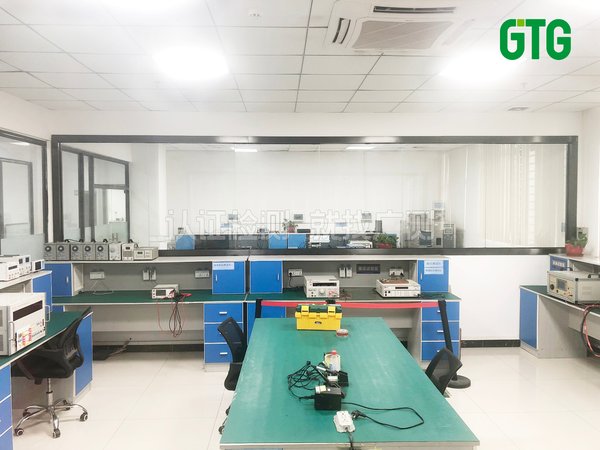
IEC 62368-1 Safety Architecture for DIN-Rail Power Supplies
DIN-rail power supplies follow the IEC 62368-1 Hazard-Based Safety Engineering (HBSE) framework, with the key safety parameters driven by the industrial installation environment:
Isolation and dielectric withstand: Primary-to-secondary reinforced insulation at 3000 VAC (1 min) for 250 Vrms working voltage. Class I designs (with protective earth) require basic insulation (1500 VAC) supplemented by protective earthing — the earth continuity resistance must be ≤ 0.1 Ω measured at 25 A test current for at least 1 minute per IEC 62368-1 §5.6.3.
Creepage and clearance: At 250 Vrms / Pollution Degree 2: primary-to-secondary creepage ≥ 5.0 mm (basic insulation) or ≥ 6.4 mm (reinforced, for Class II). If the installer's control cabinet environment is poorly sealed (high humidity, industrial dust), the certification body may require Pollution Degree 3 assessment — increasing creepage to ≥ 8.0 mm (basic) and ≥ 10.0 mm (reinforced). The PD classification must be documented in the installation manual.
Earth leakage current: ≤ 3.5 mA normal operation for stationary/fixed equipment. DIN-rail supplies exceeding 3.5 mA must use permanent wiring (not a plug connection) and carry a warning label per IEC 62368-1 §5.7.5. This is a frequent certification finding — a product designed with generous Y-capacitance for EMC compliance inadvertently exceeds the 3.5 mA threshold.
Thermal Verification — The High Ambient Temperature Reality
Industrial DIN-rail supplies are rated for ambient temperatures (Ta) of +50°C to +70°C — significantly hotter than the +25°C to +40°C typical of consumer adapters. Under IEC 62368-1 §6.4, the temperature rise test is conducted at the rated Ta with the unit operating at rated load until thermal equilibrium:
- Transformer winding temperature (resistance method): ≤ 115 K rise for Class F insulation (155°C rated). At Ta=60°C, the winding temperature reaches 175°C — still within Class F but leaves little margin for overload or adjacent-equipment heating.
- Electrolytic capacitor case temperature: must not exceed the capacitor's rated temperature (typically 105°C for industrial-grade) minus a 5°C safety margin. In 60°C ambient, the capacitor's self-heating must be limited to ~40°C — this constrains the allowable ripple current through the output filter capacitors.
- PCB glass transition temperature (Tg): The PCB substrate must have a Tg ≥ 130°C for operation at Ta=60°C with internal hotspots — FR-4 (Tg 130°C) is marginal; high-Tg FR-4 (170°C) or polyimide is preferred for DIN-rail designs operating above 55°C ambient.
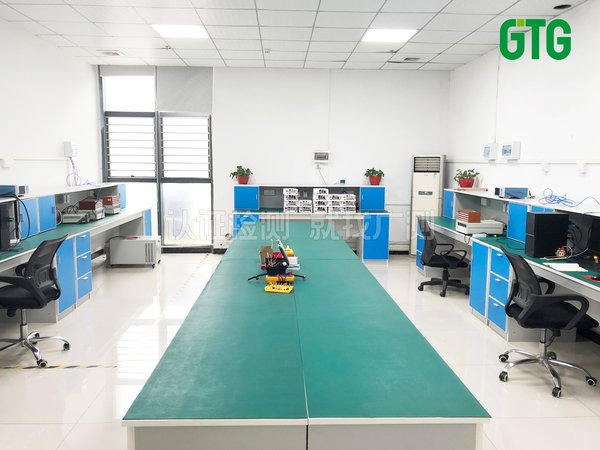
DIN-Rail Mounting — Mechanical Safety and Vibration
IEC 62368-1 §8.5 requires mechanical strength verification for the DIN-rail mounting mechanism (EN 60715 TH35 rail): the power supply must withstand a sinusoidal vibration sweep of 10-55 Hz at 0.35 mm displacement amplitude in three orthogonal axes per IEC 60068-2-6, followed by verification that the unit remains securely clamped to the rail. For supplies intended for transportation applications (railways, marine), additional shock testing per IEC 60068-2-27 (15 g, 11 ms half-sine) may be specified by the end-equipment integrator — this is outside the IEC 62368-1 scope but required by sector-specific standards.
Frequently Asked Questions
Q1 Does IEC 62368-1 cover the safety of the output load circuit?
IEC 62368-1 evaluates the power supply up to its output terminals. The safety of the downstream load (PLC, sensor, actuator) powered by the DIN-rail supply is evaluated under its own applicable standard (e.g., IEC 61131-2 for PLCs). However, if the power supply's output is not SELV-compliant (exceeds 60 VDC or lacks isolation), this must be explicitly documented — the end-equipment integrator relies on this classification.
Q2 How do three-phase DIN-rail supplies differ from single-phase in IEC 62368-1 testing?
Three-phase inputs (3×400 VAC) require phase-to-phase insulation rated for 690 Vrms working voltage. This increases the required creepage by approximately 40-60% compared to 250 Vrms single-phase — the primary-side PCB layout must accommodate the larger spacing. Additionally, overvoltage category OVC III applies to three-phase industrial installations, increasing the transient overvoltage rating from 2.5 kV to 4.0 kV and the corresponding clearance distance.
Q3 Can multiple DIN-rail supplies share a single IEC 62368-1 certification?
Yes — models within the same series (same topology, same form factor, different power ratings achieved through component value scaling) can be covered by a single certification with representative testing. Test the highest-power model (thermal worst-case) and lowest-power model (protection sensitivity worst-case). Each unique transformer variant must be individually tested — transformer scaling is not covered by representative testing under IEC 62368-1 rules.
Q4 Is Pollution Degree 2 or 3 more appropriate for DIN-rail supplies in industry?
PD2 applies when the control cabinet has an IP54 or better enclosure and is not installed in an environment with conductive dust or condensing humidity. PD3 applies if the cabinet is in a harsh industrial environment (cement plants, metal grinding, offshore) — the certification body may require evidence of cabinet environmental control to accept PD2. Designing for PD3 provides maximum installation flexibility at the cost of larger PCB dimensions for increased creepage.
Q5 Does the IEC 62368-1 report serve for UL listing of a DIN-rail supply?
The IEC 62368-1 CB report with US National Deviations serves as the technical basis for UL Recognition (not UL Listing). For UL Listing (end-product certification), additional evaluation of the installation environment and end-use connections is required. Most DIN-rail supplies follow the UL Recognition path — the CB report is reviewed by UL and a UR certificate is issued. DIN-rail PSU IEC 62368 CB to UL Recognition pathway documentation.
This content is for informational reference only. Specific certification requirements must be evaluated by professional engineers. For inquiries, please contact us.
Phone: +86 18826804895 | Email: net01@gtggroup.com | https://www.anci.com
Online Application
Global certification testing, please look for ANCI
Leave a message, certified engineers 1 to 1 technical guidance!
