 Welcome to ANCI Website!
 Certificate query
 Follow WeChat
 Anci Weibo
 Sitemap
 中文
中文
anciContact Us
Service Hotline
net01@gtggroup.com
Mobile: 18826804895
FAX: 0769-85075898
E-mail: net01@gtggroup.com
Address: No. 11, headquarters 2 Road, Songshanhu high tech Industrial Development Zone, Dongguan City, Guangdong Province
KC-Certification-for-Power-Products
Edit: ANCI 2026-05-09 413
Key Takeaway: KC Certification (Korea Certification) is a mandatory market access requirement for all electrical products sold in South Korea. Power products are regulated under the Electrical Appliances Safety Control Act (K-ESCAct), with three distinct certification pathways: Compulsory Safety Certification, Safety Confirmation, and Supplier's Declaration of Conformity. The appropriate pathway is determined by the product's risk classification and rated specifications. Certification timelines vary depending on the applicable pathway, test outcomes, and documentation quality.
Scope: Switch-mode power supplies, LED drivers, battery chargers, UPS systems, and related power equipment for the South Korean market
What Is KC Certification — and Why Is It Required?
KC Certification is South Korea's unified conformity assessment mark for electrical and electronic products. It is mandated by the Electrical Appliances Safety Control Act (K-ESCAct), administered by the Korea Agency for Technology and Standards (KATS) under the Ministry of Trade, Industry and Energy (MOTIE). All electrical products placed on the South Korean market must comply with this act and carry the KC mark.
Prior to the KC system, manufacturers navigated a fragmented landscape of KCC certification (from the Korea Communications Commission) and the legacy EK certification mark. In 2009, South Korea consolidated these schemes under the unified KC framework, which became fully operational in 2010. For power product manufacturers, obtaining KC Certification is not optional—it is a legal prerequisite for importing, selling, or distributing products in South Korea. Non-compliant goods risk customs seizure, fines from market surveillance authorities, and mandatory product recalls.
Why KC Certification Matters for Power Product Exporters
- Regulatory compliance: KC Certification is legally required for market access; lack of certification exposes products to customs holds, regulatory fines, and forced withdrawal from sale
- Consumer confidence: The KC mark is widely recognized by South Korean consumers as a symbol of product safety and regulatory compliance
- Streamlined customs clearance: Products accompanied by valid KC certificates clear South Korean customs with significantly less friction, reducing the risk of delays or costly returns
Practical Insight: Working with a Dongguan-based power adapter manufacturer, the client's product was initially misclassified under the Supplier's Declaration of Conformity pathway. Upon review, it was determined that the adapter's output power exceeded 75W, placing it in the Compulsory Safety Certification category—which requires both product testing and factory inspection. The misclassification meant that all previously prepared documentation had to be restructured and retested, extending the project to approximately 12 weeks. Confirming the correct product category before preparing applications is one of the highest-value steps a manufacturer can take.
Product Classification Under the KC Framework
The Electrical Appliances Safety Control Act classifies electrical products into three regulatory tiers. Power products fall into different tiers depending on their type, rated voltage, and power output. Getting the classification right is foundational to selecting the correct certification pathway.
Compulsory Safety Certification (强制性安全认证)
The most stringent tier. Products must undergo testing by an accredited laboratory and factory inspection by a KC-approved certification body.
- Typical scope: Power supplies and adapters with rated input above 100V and output power generally exceeding 75W; certain categories of transformers and switching power supplies
- Process: Product testing + factory inspection + annual surveillance testing (every two years for certificate renewal)
Safety Confirmation (安全确认)
A streamlined pathway for lower-risk products. No factory inspection is required, reducing both cost and timeline.
- Typical scope: Selected low-power LED drivers, certain battery chargers, and power products with lower associated risk profiles
- Process: Product test report + documentation review (no factory inspection required)
Supplier's Declaration of Conformity (Supplier's DoC)
- Typical scope: Certain low-risk electrical components and subassemblies, including specific categories of power modules
- Process: Manufacturer self-declaration; no third-party testing or inspection required
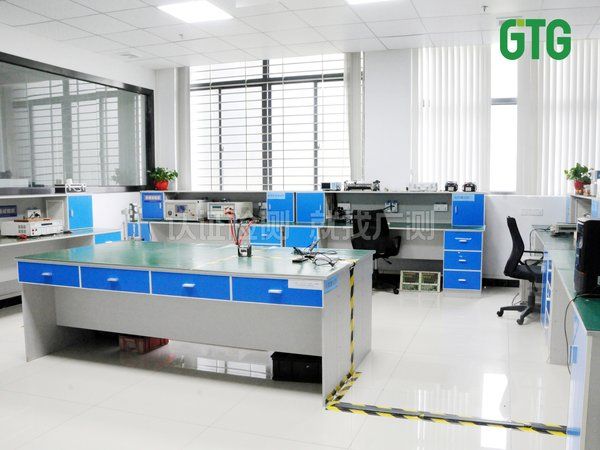
Watch Out: Product classification determines everything: the certification pathway, the test scope, whether a factory inspection is required, and the total cost. Many manufacturers waste time and money by applying under the wrong category, leading to rejected applications, duplicate testing, or mandatory factory inspections they weren't prepared for. Always confirm the classification with a KC-accredited certification body or an experienced representative before preparing your application.
Applicable Standards for Power Product KC Certification
KC Certification safety standards are based on Korean Standards (KS), most of which are either adopted from or aligned with corresponding IEC International Standards. Power products seeking KC Certification must typically satisfy both safety standards and electromagnetic compatibility (EMC) requirements.
Safety Standards
- K 60950-1 — Safety of information technology equipment (equivalent to IEC 60950-1; accepted in some markets but progressively superseded)
- K 62368-1 — Audio/video, information and communication technology equipment — Part 1: Safety requirements (equivalent to IEC 62368-1; the primary standard for new applications submitted from 2020 onward)
- K 60065 — Safety requirements for audio, video and similar electronic apparatus (equivalent to IEC 60065)
- K 61347-1 / K 61347-2-13 — Lamp controlgear standards (applicable to LED drivers and lighting power supplies)
EMC Standards
- KN 32 — Limits and methods of measurement of radio disturbance characteristics of multimedia equipment (equivalent to CISPR 32 / EN 55032)
- KN 35 — Immunity requirements for multimedia equipment (equivalent to IEC 61000-4 series)
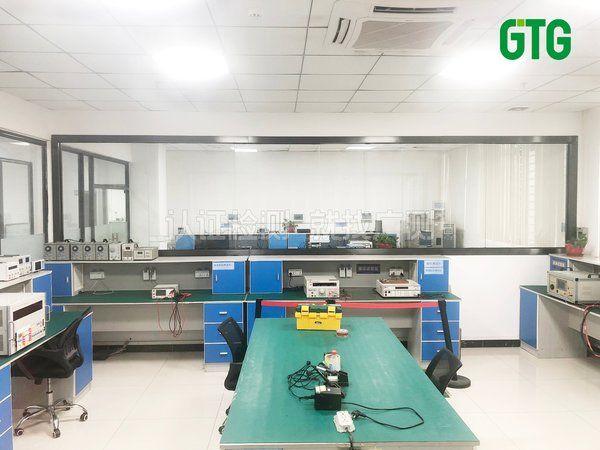
Practical Insight: During an LED driver KC Certification project, conducted emissions testing revealed that骚扰功率 exceeded KN 32 limits by approximately 3 dB, concentrated around the driver IC's switching frequency and its higher-order harmonics. The solution involved adding an EMI input filter circuit, which brought emissions down by roughly 8 dB across the affected frequency range on retest. EMC nonconformities of this type are common in power supply designs; conducting pre-compliance testing against KN 32 limits during the product development phase is far more cost-effective than discovering issues during formal certification testing.
The KC Certification Process and Required Documentation
Standard Process (Compulsory Safety Certification)
- ①Classify the product and identify applicable standards: Consult the KC Certification product catalog to determine whether the product falls under Compulsory Safety Certification or Safety Confirmation; select the relevant KS safety and EMC standards
- ②Submit application: File the KC Certification application with a KC-accredited certification body (such as KTC or KTL) or an authorized representative. A Korean Importer must be designated as the certificate holder (Certification Holder)
- ③Product testing: Submit samples to an accredited testing laboratory (either a Korean domestic laboratory or an overseas laboratory recognized under the relevant mutual recognition arrangements) for safety and EMC testing
- ④Factory inspection (Compulsory Safety Certification only): The certification body conducts an on-site audit of the manufacturing facility to verify quality management practices and product一致性 (conformity of production samples to the certified design)
- ⑤Certificate issuance: Upon satisfactory completion of testing and factory inspection, the certification body issues the KC Certificate
Core Documentation Requirements
- Completed KC Certification application form (in Korean or English)
- Korean Importer details: Company name, registered address, and contact person. The Korean Importer is the legal certificate holder and must be a registered Korean entity
- Circuit schematics, PCB layout, and bill of materials (BOM)
- Nameplate specifications (must reflect Korean voltage standard: 220V / 60Hz single-phase)
- User manual in Korean
- Safety test report and EMC test report
- Factory inspection report (Compulsory Safety Certification category only)
Watch Out: KC Certification requires all product labels and user documentation to be in Korean, and nameplate parameters must reflect the Korean supply standard (220V, 60Hz). A common pitfall for first-time applicants is submitting labels with incomplete Korean content—such as missing importer details or incomplete safety warnings—which triggers a documentation resubmission request. Have a Korean-language compliance review conducted on all labeling and documentation before submission to prevent timeline impacts.
Factors That Influence KC Certification Timelines
Actual KC Certification timelines vary significantly based on the product category and the preparedness of the applicant. Three factors consistently have the greatest impact:
Certification pathway: Compulsory Safety Certification involves both product testing and factory inspection, making it substantially longer than Safety Confirmation. If both safety and EMC testing are required, timelines add up.
Test outcomes and retesting cycles: Passing on first submission versus encountering nonconformities (corrective action → retest) can add 4 to 8 weeks. EMC nonconformities are particularly time-consuming to resolve, making pre-compliance testing a worthwhile investment.
Documentation quality and Korean translation: Incomplete submissions and labels that do not meet Korean language requirements are a leading cause of delays. Documentation remediation typically adds 2 to 4 weeks to the schedule.
For manufacturers planning South Korean market entry, a realistic lead time of 6 to 9 months from project initiation to certificate receipt is advisable, particularly for products requiring Compulsory Safety Certification.
Frequently Asked Questions
Q1 — Must the KC Certificate holder be a Korean company?
Yes. The KC Certificate holder (Certification Holder) must be a company registered in South Korea—typically a Korean importer or domestic distributor. Foreign manufacturers cannot hold a KC Certificate directly. However, a foreign manufacturer can engage a Korean importer under an authorized agreement, with the Korean entity filing the application as the certificate holder on behalf of the manufacturer.
Q2 — Can an existing CB certificate be used to obtain KC Certification?
Not directly, but a CB report can shorten the KC testing phase. If a CB Test Report has been issued by an NCB recognized under the relevant IECEE arrangements, it may be submitted as supporting evidence during the KC application. Some test items may be exempted, reducing the scope of retesting. However, KC Certification still requires independent assessment against Korean Standards (KS) and relevant regulations. For Compulsory Safety Certification products, factory inspection remains mandatory regardless of existing CB certificates.
Q3 — What are the labeling requirements for KC Certification?
The KC mark must be affixed to the product nameplate in the specified dimensions. Required label content includes: the KC mark itself, the KC certification number, the KC certification category (e.g., "안전확인" for Safety Confirmation or "안전인증" for Safety Certification), the name and address of the Korean importer, and the rated electrical parameters (220V / 60Hz). Some product categories also require specific Korean-language cautionary statements.
Q4 — How long is a KC Certificate valid?
KC Safety Certification certificates are valid for 3 years. Prior to expiry, the certificate holder must apply for renewal, which involves a renewal factory inspection and sampling testing. Safety Confirmation certificates do not carry a fixed expiry date, but if the applicable KS standard is revised, the certified product may require re-evaluation to maintain market compliance.
Q5 — What does KC Certification cost?
Fees depend on the certification pathway, the number of applicable standards, whether factory inspection is required, and the selected certification body. Accurate quotations require detailed product specifications. Fees depend on product classification and applicable standards; contact a certification service provider with your product details for a tailored estimate.
Key Takeaways for Power Product KC Certification
- Confirm the correct product classification before initiating the application—the pathway (Compulsory Safety Certification vs. Safety Confirmation) fundamentally shapes the entire process
- A Korean Importer must be secured as the certificate holder before the application can proceed
- Product labeling, user manuals, and cautionary statements must comply with Korean language and format requirements; engage a Korean compliance specialist to review all labeling before submission
- EMC compliance is a common obstacle in KC Certification; pre-compliance testing against KN 32 limits during product development is strongly recommended
- A valid CB report can support the KC application but does not replace the KC process or eliminate the factory inspection requirement for Compulsory Safety Certification products
- Build KC Certification into the South Korea market entry timeline early; starting 6 to 9 months before planned market entry provides adequate buffer for the full process
For more information on certification services, visit Anci Certification. To speak with a technical specialist, reach us at net01@gtggroup.com.
This article was AI-assisted. Information provided is for reference only and does not constitute certification commitments or legal advice. Refer to official regulatory sources for the latest requirements.
Email: net01@gtggroup.com
© Anci Certification · https://www.anci.com
Online Application
Global certification testing, please look for ANCI
Leave a message, certified engineers 1 to 1 technical guidance!
