 Welcome to ANCI Website!
 Certificate query
 Follow WeChat
 Anci Weibo
 Sitemap
 中文
中文
anciContact Us
Service Hotline
net01@gtggroup.com
Mobile: 18826804895
FAX: 0769-85075898
E-mail: net01@gtggroup.com
Address: No. 11, headquarters 2 Road, Songshanhu high tech Industrial Development Zone, Dongguan City, Guangdong Province
Power Supply Products Salt Spray Testing Common Pitfalls and FAQ
Edit: ANCI 2026-05-27 219
Salt spray testing for power supply products seems straightforward — place samples in a chamber and wait. But in practice, many projects fail or produce unreliable results due to common mistakes in sample preparation, method selection, and result interpretation. This FAQ highlights the pitfalls and shows you how to avoid them.
Common Pitfalls and How to Avoid Them
Q1: My power supply enclosure failed salt spray, but the coating supplier said their coating passes 480 hours. What went wrong?
This is the most common discrepancy. Coating supplier data is typically based on flat witness panels prepared under ideal conditions — uniform thickness, perfect curing, no edges. Your actual enclosure has corners, edges, mounting holes, and welded seams where coating thickness varies and coverage may be incomplete. Fix: Test actual production parts, not just flat panels. If using witness panels, ensure they undergo the same forming, welding, and coating process as the production part.
Q2: I submitted my sample without masking the back and edges. Does it matter?
It matters a lot. Unmasked edges and cut surfaces expose bare metal and accelerate corrosion inward from the edges. This creates corrosion patterns that would not occur on a properly sealed production part, leading to false failures. Fix: Always mask non-test surfaces with corrosion-resistant tape or wax. Confirm the masking plan with the lab before testing begins.
Q3: Can I switch from NSS to CASS to get results faster?
Not without customer approval. CASS and NSS produce fundamentally different corrosion mechanisms due to the copper catalyst and higher temperature. A 48-hour CASS result cannot be compared to or substituted for a 96-hour NSS requirement. They test different things. Fix: If the specification calls for NSS, you must use NSS. If you need faster turnaround, discuss with the customer whether an alternative method with a defined correlation is acceptable.
Q4: The lab reported blistering, but I cannot see it clearly in the photos. Is the result valid?
Blistering assessment per ISO 4628-2 is a visual rating system that requires trained evaluation. Some blistering is subtle and difficult to photograph clearly, especially at lower density and size ratings. Fix: Request that the lab provide close-up photographs under standardized lighting with a reference scale. If the blistering rating is critical to pass/fail, consider requesting a re-evaluation or a third-party review of the same sample.
Q5: I tested the zinc-plated steel enclosure for 96 hours and got white rust. Does this mean the plating is defective?
Not necessarily. White rust (zinc corrosion products) is an expected and often acceptable result on zinc plating in salt spray. The key question is whether the specification allows it. Many standards differentiate between white rust (surface zinc corrosion) and red rust (steel substrate corrosion). Fix: Review the acceptance criteria carefully. White rust at 96 hours may be acceptable if red rust has not initiated. Confirm the pass/fail definition with your customer before testing.
Q6: My product needs both IP testing and salt spray testing. Can I do them in any order?
Yes, the order does not affect the validity of either test, but there is a practical consideration. Salt spray testing deposits salt residue on the sample, which can affect subsequent IP testing results. Fix: If possible, use separate samples for each test. If you must use the same sample, perform IP testing first, then salt spray. Do not use a salt spray-tested sample for IP testing without thorough cleaning and drying.
Q7: The salt spray report says "no corrosion observed" but the customer still rejected it. Why?
The report may be incomplete. Common reasons for rejection include: (1) The test was performed under the wrong method or duration; (2) The report lacks photographic evidence; (3) The lab is not ISO 17025 accredited for the specific test; (4) The sample description or coating specification in the report does not match the customer documentation. Fix: Before testing, confirm the exact requirements with the customer — method, duration, acceptance criteria, report format, and lab accreditation scope. Provide this information to the lab in writing.
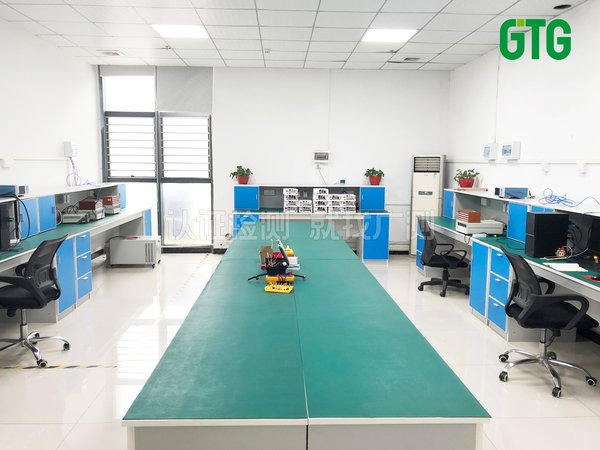
Avoid Pitfalls with the Right Lab
Most salt spray test failures are not material failures — they are process failures. Incorrect sample preparation, wrong method selection, and unclear acceptance criteria account for the majority of rejected results. Anci offers pre-test consultation that clarifies method, duration, and sample requirements before chamber time is booked — saving time, cost, and frustration.
This article was generated with AI assistance. Content is for reference only and does not constitute any testing commitment or legal advice. Always refer to the latest official standards.
Contact: net01@gtggroup.com
Online Application
Global certification testing, please look for ANCI
Leave a message, certified engineers 1 to 1 technical guidance!
