 Welcome to ANCI Website!
 Certificate query
 Follow WeChat
 Anci Weibo
 Sitemap
 中文
中文
anciContact Us
Service Hotline
net01@gtggroup.com
Mobile: 18826804895
FAX: 0769-85075898
E-mail: net01@gtggroup.com
Address: No. 11, headquarters 2 Road, Songshanhu high tech Industrial Development Zone, Dongguan City, Guangdong Province
Power Supply Products EU US Certification Step by Step Guide
Edit: ANCI 2026-05-26 265
Need EU and U.S. certification for your power supply products? Navigating the dual-market compliance landscape requires understanding how safety, EMC, and energy efficiency standards differ between the two regions. This step-by-step guide walks you through the complete certification process for both markets.
Step 1: Identify Your Product Category
- External Power Supply (EPS) — AC/DC adapters, wall chargers, USB chargers: safety + EMC + energy efficiency
- Internal power supply — open-frame or enclosed SMPS built into end equipment: safety + EMC
- Multi-output power supply — units with multiple output rails or USB ports: safety per-output evaluation + EMC + energy efficiency
Step 2: Determine the Certification Scope by Market
U.S. Market
- FCC Part 15B — EMC emissions (conducted + radiated); SDoC self-declaration path
- UL 62368-1 — safety testing per UL standard with National Differences; report must come from an ISO 17025-accredited lab
- DOE Level VI — energy efficiency (no-load power + average efficiency at 4 load points)
EU Market
- CE LVD — EN 62368-1 safety testing (per IEC framework with EU deviations)
- CE EMC — EN 55032 (emissions) + EN 55035 (immunity)
- ErP — EU 2019/1782 energy efficiency for external power supplies
- RoHS — 10 restricted substances compliance
Key Distinction:Although EN 62368-1 and UL 62368-1 both derive from IEC 62368-1, they contain National Differences and are not interchangeable. UL requires UL-listed power cords and has specific grounding requirements. Each market requires its own standard-specific report.
Step 3: Prepare Documentation and Samples
- Circuit schematics, PCB layouts, and BOM
- Transformer and inductor specification sheets
- Safety critical component certificates (capacitors, optocouplers, fuses)
- Product label artwork and user manual
Practical Insight:A manufacturer preparing a 65W USB-C GaN charger for both the U.S. and EU markets ran pre-compliance EMC testing during the prototype phase. The tests revealed conducted emissions exceeding CISPR 32 Class B limits at 10 MHz. By adding a common-mode choke to the input filter before formal submission, the company avoided a re-test cycle—particularly important because the product required both FCC and CE EMC reports.
Step 4: Test and Obtain Reports
Submit samples to an accredited lab for testing. A single lab capable of both UL and EN standards can run tests in parallel, reducing the overall timeline. After testing, compile the reports with the Declaration of Conformity (EU) and technical file, then apply the CE mark and FCC label as appropriate.
Your EU/U.S. Certification Partner
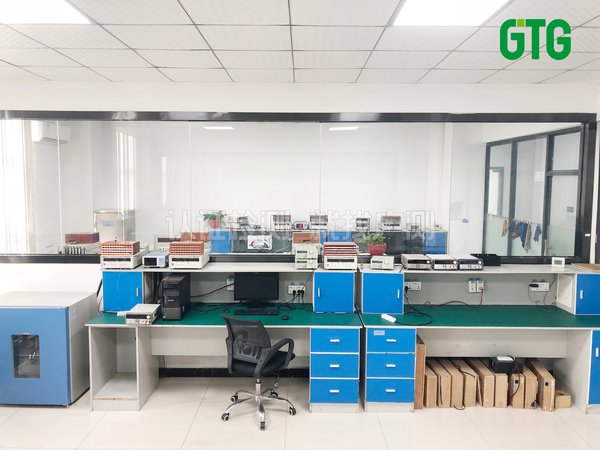
Anchi Testing specializes in power supply product certification for both EU and U.S. markets, offering one-stop services for EN 62368-1, UL 62368-1, FCC Part 15B, EN 55032/55035, DOE Level VI, ErP, and RoHS compliance. Running both market certifications at a single lab saves time and ensures consistent test results across standards.
This article was AI-assisted. The information provided is for reference only and does not constitute any certification commitment or legal advice. Please refer to the latest official regulations for authoritative guidance.
Contact:net01@gtggroup.com
Online Application
Global certification testing, please look for ANCI
Leave a message, certified engineers 1 to 1 technical guidance!
