 Welcome to ANCI Website!
 Certificate query
 Follow WeChat
 Anci Weibo
 Sitemap
 中文
中文
anciContact Us
Service Hotline
net01@gtggroup.com
Mobile: 18826804895
FAX: 0769-85075898
E-mail: net01@gtggroup.com
Address: No. 11, headquarters 2 Road, Songshanhu high tech Industrial Development Zone, Dongguan City, Guangdong Province
Telecom Power Supply UL Certification Safety Requirements and Testing Standards
Edit: ANCI 2026-07-02 287
UL certification for telecom power supply equipment — including rectifier modules, DC power systems, and integrated power shelves deployed in telecommunications central offices, base stations, and remote radio units — is a mandatory safety compliance requirement for the North American market. Operating under UL 62368-1 and subject to additional telecom-industry standards such as NEBS GR-1089-CORE for electromagnetic compatibility and GR-63-CORE for environmental resilience, telecom PSUs face a certification landscape that extends beyond conventional power supply safety testing. This article examines the UL 62368-1 framework as applied to telecom-grade power supplies, addressing unique compliance considerations including -48 V DC distribution architecture, battery reverse-polarity protection, outdoor installation requirements, and the integration of UL certification with telecom operator procurement qualification.
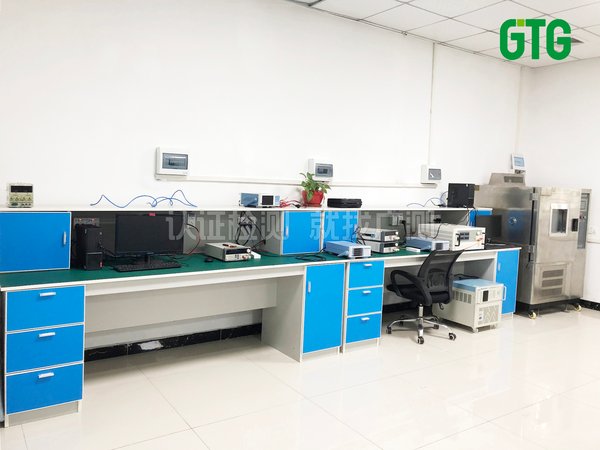
UL 62368-1 Framework for Telecom Power Systems
UL 62368-1 classifies telecom power supplies according to the same energy source framework applied to all IT and communication equipment. The AC input connection represents an ES3 energy source requiring reinforced insulation to all accessible surfaces and secondary circuits. The DC output — typically -48 V nominal in telecom applications — falls within ES1 voltage limits (below 60 V DC), but the available fault current and power level at the DC bus may push the evaluation into PS3 territory for fire hazard classification, requiring fire enclosure construction. A critical distinction in telecom PSUs is the positive-ground DC distribution scheme commonly used in North American telecom infrastructure: the -48 V return is connected to earth ground, meaning the energized conductor operates at a negative potential relative to ground. This configuration must be documented in the UL application and assessed for its impact on insulation coordination, touch current, and fault protection behavior.
Telecom rectifiers designed for outdoor remote radio unit applications face ambient temperature extremes ranging from -40°C to +55°C, with solar radiation adding thermal load to enclosure-mounted equipment. UL 62368-1 temperature rise testing must reflect these worst-case ambient conditions. For outdoor telecom PSUs, the enclosure ingress protection rating and condensation management design are evaluated alongside electrical safety to ensure that moisture ingress does not compromise insulation integrity over the equipment's operational lifetime.
Engineering note: Battery reverse-polarity protection is a critical safety function in telecom DC power systems. During installation and maintenance of external battery strings, accidental polarity reversal must not create a fire or shock hazard. The protection circuit — typically a series MOSFET or relay combined with fuse coordination — must be designed to withstand the full short-circuit current of the battery string for the duration required for the protective device to clear the fault. This scenario should be explicitly addressed in the UL 62368-1 single-fault test plan.
Core Safety Test Requirements and Telecom-Specific Considerations
Temperature rise testing represents the most demanding element of telecom PSU UL certification, particularly for high-power rectifier modules operating at elevated ambient temperatures. Key measurement points include transformer winding temperature via the resistance method, electrolytic capacitor case temperature at both the PFC output and DC output stages, power semiconductor junction temperature calculated from case measurements and manufacturer thermal resistance data, and PCB trace temperature at high-current bus bar and output distribution paths. For modular rectifier systems with N+1 redundancy, the temperature rise must be evaluated under the worst-case condition — typically full rated load with one module removed, forcing the remaining modules to operate at elevated output.
Hot-swap safety is a telecom-specific test requirement. Rectifier modules in telecom power shelves are designed for field replacement without system shutdown. UL 62368-1 requires that during module insertion and extraction, maintenance personnel cannot contact ES2 or ES3 energy sources. The connector design must implement a make-first-break-last grounding sequence, and the module guide rails and retention mechanism must prevent partial insertion that could expose live terminals. Testing must simulate both straight insertion and angled insertion conditions, as real-world field operations do not always follow ideal alignment paths.
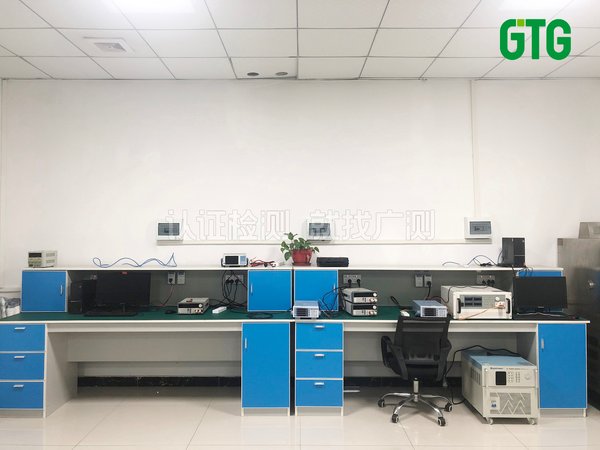
UL Certification Integration with NEBS and Operator Qualification
For telecom PSU manufacturers targeting North American carriers, UL certification operates within a broader compliance ecosystem. NEBS (Network Equipment-Building System) requirements per GR-1089-CORE address EMC and electrical safety from a network operator perspective, while GR-63-CORE addresses physical protection including earthquake resistance, thermal robustness, and fire resistance. UL certification satisfies the baseline regulatory safety requirements, but NEBS testing must be addressed as a parallel workstream for equipment destined for carrier central offices and cell sites. The strategic approach is to coordinate UL and NEBS testing to avoid duplication: a single EMC chamber session can capture data for both FCC Part 15B (supporting the UL SDOC component) and GR-1089-CORE EMC requirements. Similarly, thermal testing can be configured to satisfy both UL 62368-1 temperature rise limits and the NEBS thermal margin requirements. Early engagement with telecom PSU UL and NEBS testing is essential to define an efficient combined test plan.
Frequently Asked Questions
Q1 How does UL 62368-1 address the -48 V positive-ground telecom architecture?
The positive-ground configuration is assessed under UL 62368-1's insulation coordination framework. The voltage stress across insulation barriers is determined by the actual operating voltage relative to ground. In a positive-ground system, the -48 V output conductor may be at ES1 potential, but the return-to-ground potential under fault conditions must be evaluated. Key considerations include ensuring that protective earthing continuity is maintained throughout the system and that the fuse or circuit breaker placement properly interrupts fault current paths in the positive-ground topology.
Q2 Is NEBS certification required in addition to UL for telecom PSUs sold to US carriers?
UL is a legal requirement; NEBS is a contractual requirement imposed by major US telecommunications carriers. While UL compliance is mandatory for market access, NEBS compliance is effectively mandatory for equipment destined for carrier central offices and cell sites, as nearly all major operators (AT&T, Verizon, T-Mobile) require NEBS Level 3 compliance in their procurement specifications. Equipment sold through distribution channels for enterprise or private network applications may not require NEBS. The manufacturer's target customer profile determines whether NEBS investment is necessary.
Q3 What are the key differences between UL certification for telecom PSUs and server PSUs?
Both share UL 62368-1 as the base safety standard, but telecom PSUs introduce several unique considerations: the positive-ground DC distribution requires specific fault analysis; outdoor-rated equipment triggers additional environmental exposure assessment; modular hot-swap systems require insertion/extraction safety verification; battery connection terminals must address reverse-polarity and short-circuit current scenarios; and the load characteristics differ — telecom loads are predominantly constant-power electronic loads, whereas server PSUs supply a mix of dynamic digital loads and mechanical loads (fans, disk drives) requiring different overload and transient response safety evaluation.
Q4 How are modular rectifier systems with N+1 redundancy evaluated under UL?
The system must be evaluated under worst-case loading conditions. With N+1 configuration, the failure of one rectifier module causes the remaining N modules to carry the full system load. Temperature rise testing must reflect this condition — testing with all modules operating normally establishes the baseline, and testing with one module removed and the remaining modules at elevated load verifies safe operation under the redundant configuration's worst case. The bus bar current rating and connection terminal temperature rating must also be verified under the maximum aggregate current condition.
Q5 Can UL 62368-1 test data be reused for IEC 62368-1 certification of the same telecom PSU?
Yes, to a large extent. Both standards derive from the same IEC base document, and the core test methodology, measurement techniques, and pass/fail criteria are substantially identical. The primary differences lie in national deviations: UL 62368-1 may impose more stringent creepage distance requirements for certain insulation classes due to the North American 120 V/240 V split-phase mains configuration, and certain component approval requirements differ between UL Recognition and IEC component standards. With proper planning, a single test campaign can generate data satisfying both UL and IEC requirements, with supplementary testing limited to national deviation items. telecom PSU combined UL and IEC testing reduces total testing time and cost.
This content is provided for industry communication and informational reference only and does not constitute any form of certification commitment, testing advice, or legal opinion. The certification requirements, procedures, and standards referenced herein may change as regulations evolve — please refer to the latest official announcements from the relevant authorities. Specific certification requirements, timelines, and costs must be evaluated by professional engineers based on the actual product. For inquiries, please contact us by phone.
Phone: +86 18826804895 | Email: net01@gtggroup.com | www.anci.com
Online Application
Global certification testing, please look for ANCI
Leave a message, certified engineers 1 to 1 technical guidance!
