 Welcome to ANCI Website!
 Certificate query
 Follow WeChat
 Anci Weibo
 Sitemap
 中文
中文
anciContact Us
Service Hotline
net01@gtggroup.com
Mobile: 18826804895
FAX: 0769-85075898
E-mail: net01@gtggroup.com
Address: No. 11, headquarters 2 Road, Songshanhu high tech Industrial Development Zone, Dongguan City, Guangdong Province
5G Base Station Power Supply CCC Certification Guide and Market Access Strategy
Edit: ANCI 2026-07-02 265
China Compulsory Certification for 5G base station power supply equipment is a statutory prerequisite for deploying AAU power modules, BBU centralized power systems, and integrated outdoor power cabinets within China's telecommunications infrastructure. As the country continues its extensive 5G network buildout — with over 4 million base stations deployed across all three major operators — the power supply equipment market represents a significant volume opportunity, but one that is gated by mandatory CCC certification and operator-specific supplier qualification procedures. This guide provides a strategic framework for power supply manufacturers targeting China's 5G infrastructure market, covering the CCC certification pathway, the operator procurement qualification landscape, and practical strategies for aligning certification timelines with carrier tender cycles.
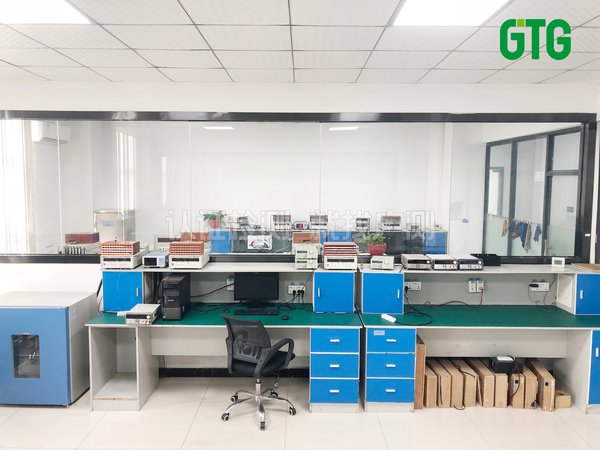
CCC Certification Pathway for 5G Base Station Power Supplies
5G base station power supplies fall under the CCC mandatory certification catalog as IT and communication technology equipment. The applicable standards are GB 4943.1-2022 for safety and GB/T 9254.1-2021 for EMC emissions. The CCC certification process follows the established pattern of type testing at a designated laboratory, initial factory inspection, and post-certification surveillance. For manufacturers new to the Chinese market, the CCC framework has several distinguishing characteristics that warrant attention. First, CCC operates a designated certification body and designated testing laboratory system — manufacturers must work with the specific CB and laboratory assigned to their product category, creating a defined but somewhat less flexible certification pathway compared to the European Notified Body system. Second, the initial factory inspection is a mandatory on-site audit conducted by Chinese auditors — unlike the UL system where factory inspection may be conducted by local representatives, CCC factory audits require Chinese-speaking auditors to visit the manufacturing facility. Third, the CCC mark must appear on both the product and its packaging, and the mark includes a unique certification number that enables traceability through the CCC online database.
The critical technical challenge in 5G PSU CCC testing is the temperature rise evaluation at elevated ambient temperatures. 5G AAU power modules designed for tower-top installation must operate at ambient temperatures reaching 55°C or higher. Under full load at maximum rated ambient, the thermal design margin must accommodate component temperature limits with appropriate safety margins. Power supplies with wide operating temperature ranges should be tested at the worst-case combination of high ambient temperature and low input voltage — typically 55°C ambient at minimum rated AC input — as this condition produces the highest component temperatures due to increased input current. Pre-compliance thermal evaluation is strongly recommended before formal CCC type testing.
Navigating China's Telecom Operator Procurement Landscape
CCC certification is the regulatory baseline; operator qualification is the commercial gate. China's three major telecom operators — China Mobile, China Telecom, and China Unicom — each maintain independent supplier qualification systems that go beyond CCC requirements. Key elements of the operator qualification process include: supplier pre-qualification documentation (business license, financial statements, manufacturing capability evidence, quality system certifications); product technical compliance testing at operator-designated laboratories (which may impose stricter test criteria than CCC); on-site factory audits conducted by operator procurement teams; and sample field trial deployments before volume purchase orders are issued.
For manufacturers entering this market, the recommended timeline sequence is: complete CCC type testing and obtain CCC certificate; then initiate operator supplier pre-qualification in parallel across all three operators; follow with operator-specific compliance testing (which can reference CCC test data where testing parameters overlap); conduct factory audit preparation drawing on the CCC factory inspection experience; and proceed to field trial deployment. A phased approach that builds from CCC through operator qualification is more resource-efficient than attempting to address all requirements simultaneously. Engaging 5G PSU CCC certification expertise provides practical navigation of the combined regulatory and commercial qualification process.
Strategic insight: China's 5G base station procurement operates on annual or semi-annual tender cycles. Missing a tender window can delay market entry by six to twelve months. Manufacturers should back-calculate from the target tender date: operator qualification typically requires three to six months of lead time, and CCC certification adds an additional period. Starting the certification process before product development is finalized — with the final design changes incorporated during type testing — aligns certification completion with commercial readiness.
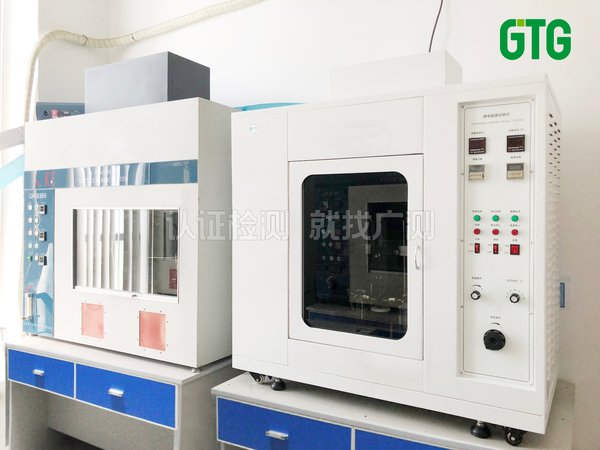
Building a Multi-Market Certification Strategy for 5G PSU Manufacturers
China represents the world's largest 5G deployment market, but global demand for 5G infrastructure power supplies extends across Asia, Europe, the Middle East, and Africa. A coordinated certification strategy that leverages CCC testing as the foundation for subsequent international certifications maximizes return on testing investment. GB 4943.1-2022, EN 62368-1, and UL 62368-1 all derive from IEC 62368-1, meaning the core safety test data generated during CCC testing is directly usable for CE and UL certification. EMC testing to GB/T 9254.1-2021 (based on CISPR 32) similarly generates data applicable to EN 55032 and FCC Part 15B compliance. The forward-looking strategy is to plan CCC type testing with international certification requirements in mind from the start — configuring test setups and documentation to serve multiple certification pathways — rather than treating each market as an independent certification project. A 5G PSU multi-market compliance reduces total testing time and enables synchronized market entry across regions.
Frequently Asked Questions
Q1 Do foreign manufacturers need a China-based entity to apply for CCC certification?
A foreign manufacturer without a legal entity in China may apply for CCC certification as an overseas applicant. In this case, the manufacturer must appoint a China-based responsible agent who handles communication with the certification body, arranges factory inspection logistics, and assumes certain regulatory responsibilities. The responsible agent must be a legally registered entity in China. Alternatively, if the product is imported and sold by a China-based importer or distributor, that entity can serve as the CCC applicant.
Q2 How does the CCC certification timeline align with typical 5G base station tender schedules?
China's major 5G tenders are typically announced in Q1 and Q3 of each year, with bid submission deadlines falling roughly one to two months after announcement. Given CCC certification lead time and operator pre-qualification requirements, a prudent timeline starts CCC application roughly eight to ten months before the target tender date. This allows for type testing, factory inspection, operator pre-qualification document preparation, operator-specific compliance testing, and field trial arrangements. Starting certification work during product development rather than after product launch compresses the overall time-to-tender window.
Q3 What additional certifications beyond CCC do Chinese operators typically require?
Beyond CCC, operators typically require: a valid ISO 9001 quality management system certificate; ISO 14001 environmental management and ISO 45001 occupational health and safety certifications (increasingly standard requirements); China Telecommunication Technology Labs type approval testing for network-connected power equipment; and in some cases, China's environmental protection compliance documentation (RoHS equivalent). Operators may also request NEBS-equivalent environmental testing per Chinese telecom industry standards YD/T, though this is operator-specific rather than regulatory.
Q4 Can CCC type testing at one designated laboratory support supplier qualification with all three operators?
The CCC certificate itself is universally accepted by all three operators as evidence of mandatory certification compliance. However, each operator maintains its own list of recognized testing laboratories for supplementary compliance testing — the CCC-designated laboratory may or may not be on a given operator's approved list. It is advisable to verify whether the CCC testing laboratory is also recognized by the target operators before committing to the CCC test program, as this can enable test data reuse and avoid duplicate testing.
Q5 What is the long-term strategy for maintaining CCC certification across a growing 5G PSU product family?
For manufacturers with multiple 5G PSU models targeting different power levels and deployment scenarios, a platform-based CCC management strategy is recommended. Establish a common architecture platform — with standardized safety-critical component selection (transformers, optocouplers, fuses, PCB materials) — that can support CCC certification for the highest-power model with test data extended to lower-power variants through engineering assessment. Implement a structured engineering change control process that triggers CCC compliance impact review for any modification affecting safety-critical components or construction. Annual CCC surveillance audits should be treated as routine operational events rather than ad-hoc preparation exercises. 5G PSU CCC certification management supports sustainable growth in the Chinese telecom power supply market.
This content is provided for industry communication and informational reference only and does not constitute any form of certification commitment, testing advice, or legal opinion. The certification requirements, procedures, and standards referenced herein may change as regulations evolve — please refer to the latest official announcements from the relevant authorities. Specific certification requirements, timelines, and costs must be evaluated by professional engineers based on the actual product. For inquiries, please contact us by phone.
Phone: +86 18826804895 | Email: net01@gtggroup.com | www.anci.com
Online Application
Global certification testing, please look for ANCI
Leave a message, certified engineers 1 to 1 technical guidance!
