 Welcome to ANCI Website!
 Certificate query
 Follow WeChat
 Anci Weibo
 Sitemap
 中文
中文
anciContact Us
Service Hotline
net01@gtggroup.com
Mobile: 18826804895
FAX: 0769-85075898
E-mail: net01@gtggroup.com
Address: No. 11, headquarters 2 Road, Songshanhu high tech Industrial Development Zone, Dongguan City, Guangdong Province
Desktop Power Adapter UL Certification Safety Requirements
Edit: ANCI 2026-07-09 353
UL certification for desktop power adapters and multi-port desktop charging stations is a mandatory safety compliance requirement for the North American market. Under UL 62368-1, desktop power supplies must demonstrate safety across AC-DC power conversion, multi-port USB output management, and enclosure integrity. Fanless passive-cooled designs — common in desktop adapters for silent operation — face particular thermal management challenges due to the absence of forced-air cooling. This guide provides a technical framework for desktop power adapter UL certification, covering the UL 62368-1 energy source classification, multi-port simultaneous loading temperature rise testing, USB-C PD safety evaluation, and strategies for certifying product families spanning multiple power ratings.
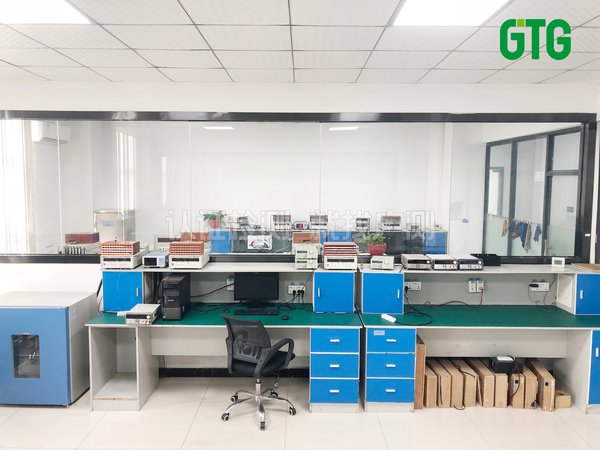
UL 62368-1 Thermal and Multi-Port Evaluation
Desktop adapters are evaluated under UL 62368-1 with energy source classification driving the safeguard requirements. The AC input represents ES3 (hazardous energy) requiring reinforced insulation to all accessible surfaces and the secondary circuit. Outputs below 60 V DC and within PS2 power limits (100 W) require basic safeguards; outputs exceeding the PS2 threshold enter PS3 territory with fire enclosure requirements. The plastic enclosure must satisfy UL 94 V-0 flammability classification and ball pressure testing at elevated temperature.
Multi-port desktop charging stations present the most demanding temperature rise scenario: all USB-A and USB-C ports loaded simultaneously at maximum rated output. The cumulative heat dissipation within the passively cooled enclosure drives internal temperatures significantly higher than single-port operation. For PD-capable ports, each PDO voltage level must be evaluated for temperature rise — the highest-power PDO combination typically produces the worst-case thermal condition, but intermediate voltage levels where converter efficiency is lower may produce localized hot spots. Desktop adapter multi-port thermal pre-scanning identifies the critical loading configuration before formal certification testing.
Component Compliance and Multi-Market Coordination
Desktop power adapters with detachable AC power cords require the AC inlet connector and cord set to carry UL Recognition (typically UL 817 for cord sets, UL 498 or IEC 60320 for inlet connectors). The AC cord's current rating must match or exceed the adapter's maximum input current. USB-C connectors must be UL Recognized and rated for the maximum current delivered per port — USB PD 3.1 EPR at 5A imposes additional contact current and temperature rise verification at the connector level.
For manufacturers serving global markets, UL 62368-1, EN 62368-1, and IEC 62368-1 share common test methodology. A coordinated desktop adapter UL CE and CB joint certification generates data for multiple regulatory frameworks from a single test campaign, reducing total certification time.
Frequently Asked Questions
Q1 How does a desktop adapter differ from a wall-mount adapter in UL testing?
Desktop adapters have a detachable AC cord and inlet connector, adding connector evaluation (contact resistance, retention force, insertion cycles) to the test scope. Wall-mount adapters integrate the plug directly and undergo plug blade retention and mechanical stress tests. Desktop adapters are typically placed on surfaces during use, so enclosure bottom surface temperature limits may be lower than wall-mount adapters.
Q2 What is the fire enclosure requirement for high-power desktop adapters?
Desktop adapters with outputs exceeding 100 W (PS3) require a fire enclosure rated V-1 minimum per UL 94. The enclosure must contain any internal fire and prevent flame propagation to surrounding surfaces. Internal components that could ignite under fault conditions must be positioned away from enclosure openings.
Q3 Can a desktop adapter product family from 30W to 100W be covered by one UL certificate?
Yes, if all models share the same platform architecture. The 100W model serves as the principal test unit; lower-power variants are covered through engineering assessment with verification testing at their respective ratings. Desktop adapter UL family certification requires documented justification for test reduction.
Q4 What AC cord compliance is needed for desktop adapter UL?
The detachable AC power cord must carry UL 817 certification. The cord's current rating, voltage rating, and plug type (NEMA 1-15P or 5-15P) must match the adapter's input specifications. Non-certified cords cannot be used in a UL-certified desktop adapter.
Q5 How should firmware updates to PD controllers be managed for UL compliance?
Firmware changes affecting output power, voltage levels, protection thresholds, or PD protocol behavior must be evaluated for UL compliance impact. A desktop adapter UL firmware change assessment determines whether supplementary testing or UL re-evaluation is required.
This content is provided for industry communication and informational reference only and does not constitute any form of certification commitment, testing advice, or legal opinion. The certification requirements, procedures, and standards referenced herein may change as regulations evolve — please refer to the latest official announcements from the relevant authorities. Specific certification requirements, timelines, and costs must be evaluated by professional engineers based on the actual product. For inquiries, please contact us by phone.
Phone: +86 18826804895 | Email: net01@gtggroup.com | www.anci.com
Online Application
Global certification testing, please look for ANCI
Leave a message, certified engineers 1 to 1 technical guidance!
