 Welcome to ANCI Website!
 Certificate query
 Follow WeChat
 Anci Weibo
 Sitemap
 中文
中文
anciContact Us
Service Hotline
net01@gtggroup.com
Mobile: 18826804895
FAX: 0769-85075898
E-mail: net01@gtggroup.com
Address: No. 11, headquarters 2 Road, Songshanhu high tech Industrial Development Zone, Dongguan City, Guangdong Province
High Power Supply CCC Certification Testing Guide and Compliance
Edit: ANCI 2026-07-09 319
China Compulsory Certification for high-power power supplies is a statutory requirement for industrial-grade PSUs rated above 500 W entering the Chinese market. Unlike consumer-level adapters where thermal management margins are relatively generous, high-power supplies operating at kilowatt levels face stringent GB 4943.1-2022 evaluation across temperature rise, fault containment, and cooling system reliability. This guide provides a strategic framework for high-power PSU CCC certification, addressing multi-output thermal testing methodology, forced-air cooling system safety assessment, and practical approaches for aligning CCC certification with international UL and CE requirements for manufacturers serving global industrial markets.
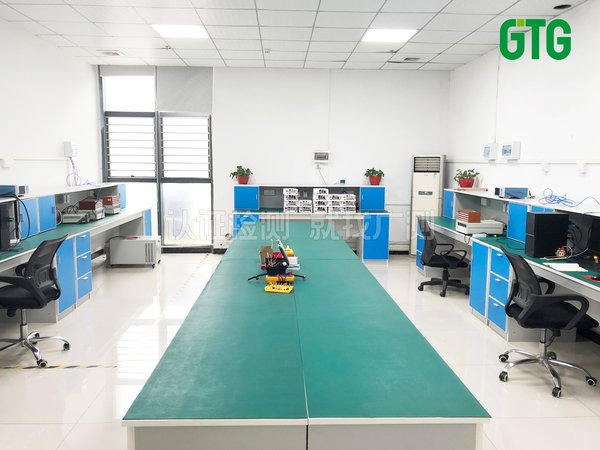
CCC Thermal and Cooling System Evaluation for High-Power PSUs
High-power PSUs operating above 100 W fall into the PS3 power source classification under GB 4943.1-2022, triggering fire enclosure requirements (V-1 minimum material) and extended temperature rise testing across all output rails at full combined load. Multi-output high-power PSUs — delivering combinations such as +12V/+5V/+3.3V or +/-24V/48V — present complex loading matrices where temperature rise must be evaluated at worst-case combinations. The key pre-certification activity is thermal scanning across loading configurations to identify the combination producing maximum component temperatures.
Forced-air cooling introduces safety assessment unique to high-power PSUs: the cooling fan must carry CCC or equivalent safety certification; fan stall (locked rotor) testing verifies that internal temperatures under worst-case cooling failure remain within safe limits and that over-temperature protection activates within the required timeframe; redundant fan configurations (N+1) must be evaluated with single fan failure scenarios. High-power PSU CCC thermal and fan safety testing conducted as an integrated assessment rather than sequential tests optimizes sample usage and test duration.
International Certification Coordination for High-Power PSUs
High-power industrial PSUs serving global markets face a matrix of safety certifications: CCC (GB 4943.1-2022) for China, UL 62368-1 for North America, EN 62368-1 for Europe, and IEC 62368-1 for CB Scheme. These standards share common roots in IEC 62368-1, enabling substantial test data reuse. A high-power PSU CCC CE and UL triple certification program structured around a single coordinated test campaign generates data for all three regulatory frameworks, reducing total certification investment compared to sequential market-by-market approaches. The CCC certification additionally requires the initial factory inspection and ongoing surveillance, which must be factored into the overall certification timeline and resource planning.
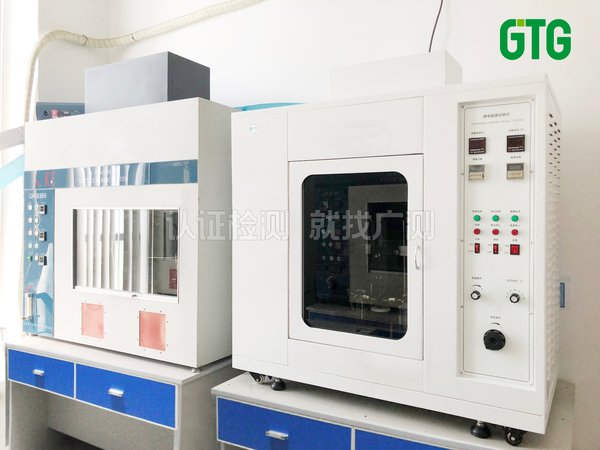
Frequently Asked Questions
Q1 What power level triggers the PS3 fire enclosure requirement?
PS3 classification applies when any output exceeds 100 W available power under normal and single-fault conditions. High-power PSUs above 500 W are universally PS3, requiring V-1 minimum enclosure material and fire containment verification under fault testing.
Q2 How is cooling fan redundancy evaluated under CCC?
For N+1 fan configurations, the worst-case fan failure (typically the fan closest to the hottest component) is simulated, and temperature rise of all critical components is measured under full load. The over-temperature protection must activate before any component exceeds its rated limit. Dual-fan systems must be tested with each fan individually locked.
Q3 How can high-power PSU CCC, UL, and CE testing be combined?
The core safety tests share common methodology under the IEC 62368-1 framework. A coordinated high-power PSU triple-standard safety testing program generates data for GB 4943.1, UL 62368-1, and EN 62368-1 from one test campaign, with supplementary testing limited to national deviations.
Q4 What is the recommended approach for CCC certification of a high-power PSU product family?
The highest-power model with all features enabled serves as the principal test unit. Lower-power models sharing the same architecture are covered through engineering assessment. If different power levels use different cooling solutions (e.g., fanless 500W vs. forced-air 2000W), each cooling architecture requires independent worst-case thermal evaluation.
Q5 What triggers CCC recertification for a high-power PSU design change?
Changes to the main power transformer, switching semiconductors, cooling system configuration, enclosure material, or output power ratings trigger CCC change assessment. High-power PSU CCC design change management should be integrated into the product revision process.
This content is provided for industry communication and informational reference only and does not constitute any form of certification commitment, testing advice, or legal opinion. The certification requirements, procedures, and standards referenced herein may change as regulations evolve — please refer to the latest official announcements from the relevant authorities. Specific certification requirements, timelines, and costs must be evaluated by professional engineers based on the actual product. For inquiries, please contact us by phone.
Phone: +86 18826804895 | Email: net01@gtggroup.com | www.anci.com
Online Application
Global certification testing, please look for ANCI
Leave a message, certified engineers 1 to 1 technical guidance!
